Communities of practice
they only succeed when lightly held
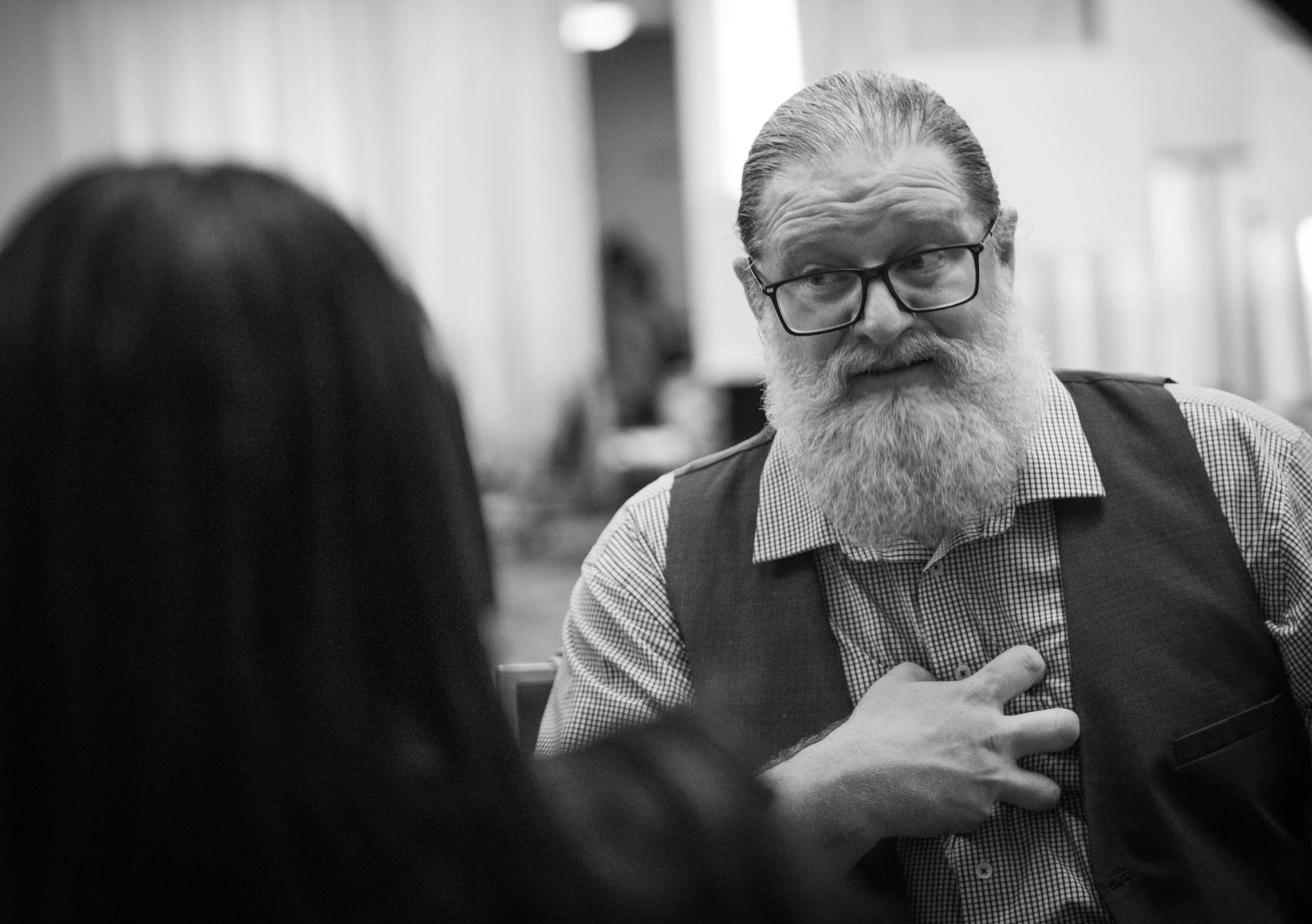
‘Holding community with care’
Emergence in Practice
I remember being part of a remarkable Community of Practice (CoP) event a few years ago. It was a gathering of facilitators at different stages of their craft. Some were deeply experienced; others were only beginning to realise they wanted to become facilitators. All of us were there to learn, to share, and to explore what it means to grow into the identity of a facilitator.
The session that stands out, as I write this, is one that explored those “difficult” facilitations… those moments where a client is disruptive, a group refuses to collaborate, or the room shifts in an unexpected way.
In our conversation that day, we opened with a simple question:
What is the hardest thing you’ve faced in facilitating a tough room?

‘Emergence across distance’
Orroral Valley,
Canberra, ACT
Very quickly, people began offering stories. Not polished case studies, but raw experiences: moments of collapse, power imbalances, split decisions, and uncertainty. The session was filled with an exchange of conversation and mutual sharing of insights, and of pains.
A few weeks later, I was catching up with one of the participants of that conversation, a facilitator who shared with me that another facilitator, a close acquaintance, from the community had reached out to answer one of the questions they posed in the Community of Practice. They started to build a relationship, and continue to do so, (often holding conversations over the morning coffee break!).
I look at this, and the many other elements of connection that I saw, and see the as examples of genuine shared learning. Like that CoP meeting on ‘difficult workshops’… there was no ‘expert’ on the stage. It was not a ‘chalk and talk’, or ‘ There were no slides asserting doctrine. What emerged was collective insight. A tapestry of individual experience woven into shared understanding. The group taught itself, and in doing so strengthened itself. What unfolded wasn’t instruction; it was co-creation of how we practice our craft… together.
This is what Communities of Practice (CoPs) are at their best; spaces where practitioners share, reflect, question, and grow together.

‘Learning inside the unknown’
‘Leggo Land’ / Orroral Valley Ridge,
Canberra, ACT
Why This Matters: The Core Tension
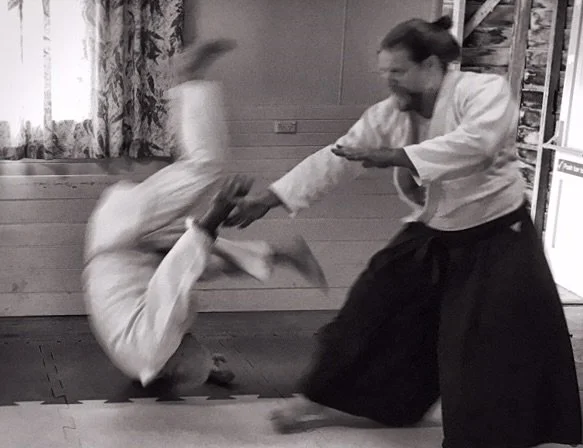
‘Dynamic Balance and Control’
Aikido at Braidwood Dojo
Across organisational landscapes (whether professional associations, government departments, or cross-sector networks) people increasingly talk about building communities. But not all community-building is the same.
A Community of Practice is an emergent network of shared practice, rooted in ongoing interaction among practitioners who care about doing their craft better. In foundational work on situated learning, Jean Lave and Etienne Wenger describe CoPs as groups where learning is inseparable from the social context of practice itself. It is a process of legitimate peripheral participation that leads novices toward fuller participation in a shared domain.
Etienne Wenger later elaborated that what distinguishes a CoP is not just talk or interest, but patterns of engagement that produce a shared repertoire of stories, tools, experiences, and tacit knowledge that practitioners use to make sense of their world. ScienceDirect
This emergent, social character is very different from the formalised pathways of professional bodies.
Accreditation and Community: Different Purposes, Different Logic
Accrediting entities (whether national associations, certification boards, or professional credentialing bodies) serve essential functions:
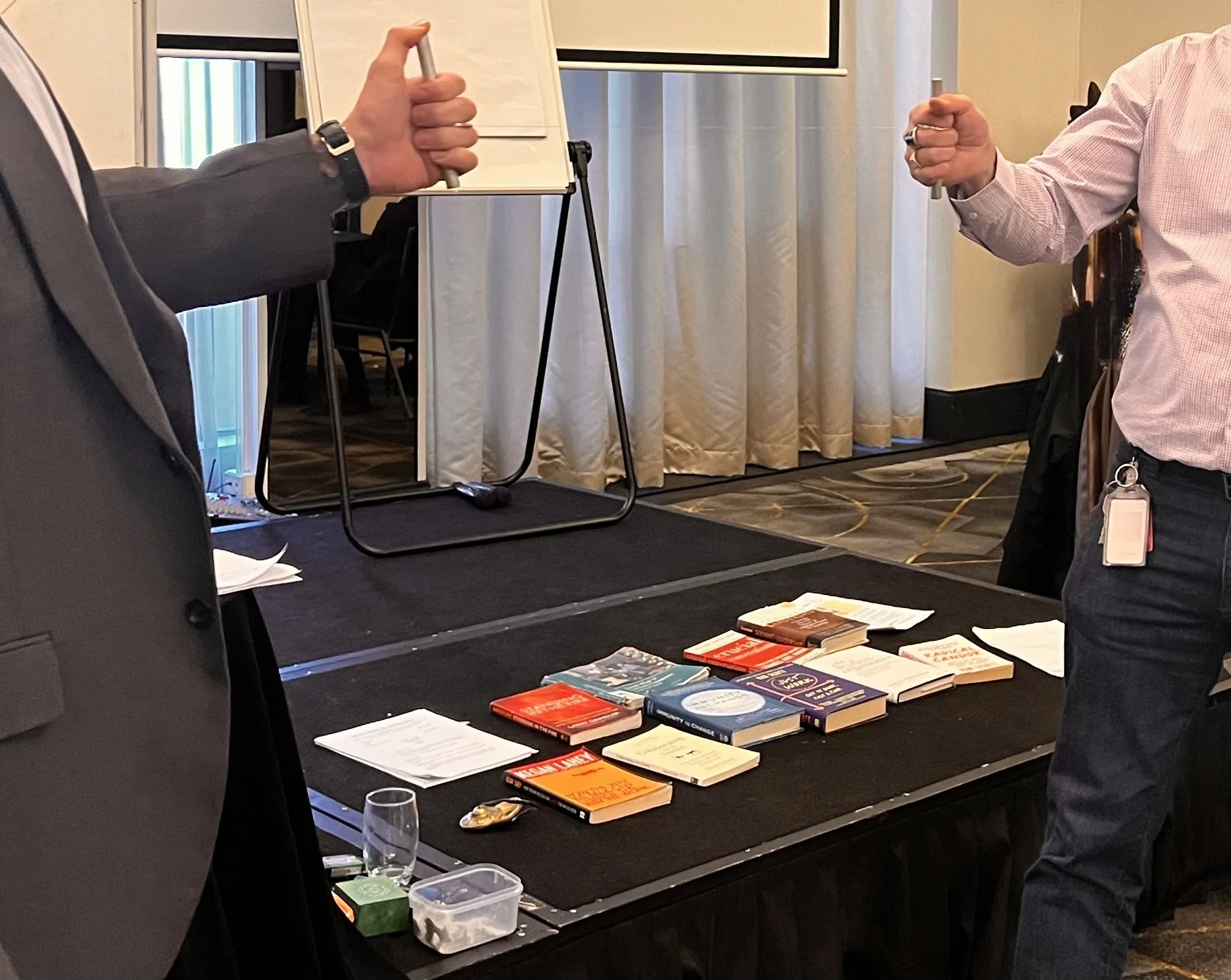
‘Testing standards under tension’
Defining and maintaining standards of practice
Upholding codes of ethics, disciplinary mechanisms, and governance
Assessing competence according to agreed benchmarks
Certifying practitioners with recognised credentials
Ensuring accountability to clients, members, and stakeholders
These roles rely on clarity, hierarchy, evaluation and compliance. They are vital for professional recognition, public trust, and quality assurance.
But this logic is not what makes a CoP.
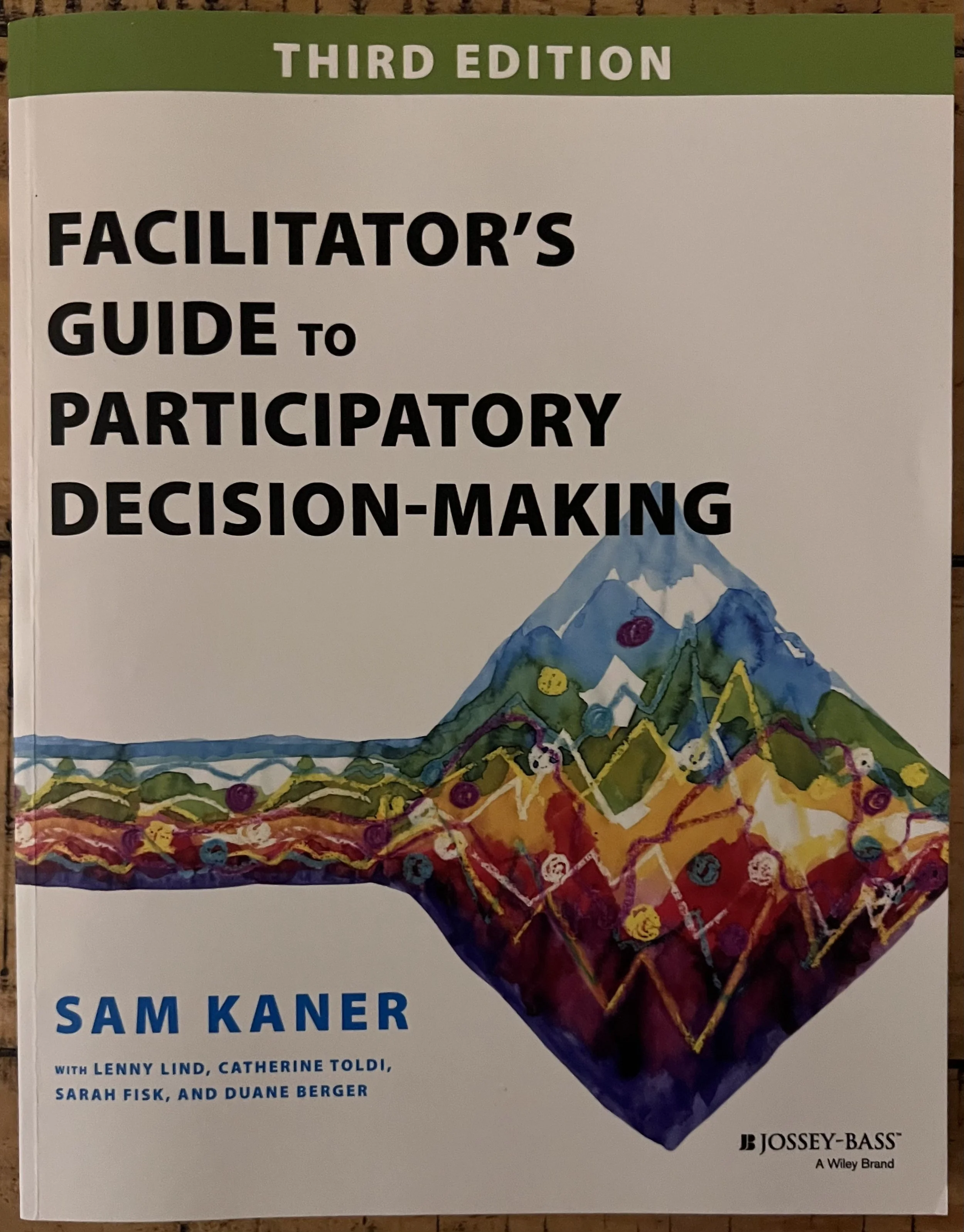
‘Facilitator’s guide to Participatory Decision-making’
Insightful Path Library
Communities of Practice, by contrast, are defined by shared domain, community, and practice. These are elements that emerge through voluntary participation, mutual engagement, and collective meaning-making. ics.crs.org
In Wenger and Trayner’s framing, CoPs enable practitioners to take collective responsibility for the knowledge they need, connecting learning and performance in a way that formal structures often cannot. wenger-trayner.com
Samuel Kaner’s Facilitator’s Guide to Participatory Decision-Making reflects a similar ethos, not as accreditation, but as creating spaces where participants co-create understanding and mutual agreements. This is the spirit of peer inquiry and shared practice that a CoP embodies, distinct from accreditation activity.
What Happens When We Confuse the Two
When organisations treat a CoP like a controlled programme (with top-down expectations, KPIs, or managerial oversight) the emergence that makes it valuable diminishes. People stop showing up as practitioners; they show up as performers. They talk less about real breakdowns and more about polished narratives.
Research on collaboration-based approaches shows that CoPs flourish where conditions allow them to emerge and self-organise rather than being engineered top-down. Organisations can cultivate the conditions for CoPs, but they cannot produce them through formal directives alone. Cambridge University Press & Assessment
Similarly, analysis in organisational knowledge work has shown that when communities are over-controlled (“tamed” rather than held lightly) they lose adaptability and the creative friction that keeps practice alive. arXiv
This is not to say accrediting bodies cannot nurture craft; they often do. But the intention and structure must be separate. Accreditation should not absorb or co-opt the CoP functions, because these serve different purposes. The former is about conformance; the latter is about collective sensemaking.
Why It Matters in APS Facilitation Practice
In the APS, facilitators come from both internal public sector roles and the private sector. This creates natural tensions: procurement boundaries, differing performance incentives, and perceptions of access or influence.
Yet APS Commissioner’s Directions and related capability guidance emphasise cross-sector learning, collaboration, and shared stewardship of capability development. Capability strengthens when diverse practitioners can safely reflect, challenge, and learn together.
So the key question is how the CoP is stewarded… so trust, autonomy, and psychological safety remain intact; while respecting public service principles and procurement rules.
Form follows function. If the purpose is community and shared craft, the holding of that space must be light enough for emergence, and structured enough to ensure clarity, inclusion, and equity.
Stewarding Effective Communities of Practice
What then characterises CoPs that thrive?
Across theory and practice we see consistent principles:
Voluntary participation — people come because they find value in the space.
Mutual engagement — members interact, share challenges, and reflect together.
Shared domain and practice — the community is anchored in real work, not abstract mandates.
Stewardship, not ownership — there is support without control.
Psychological safety — truth and vulnerability are possible without fear of judgement.
In interviews and writing, Nick Housego has articulated how CoPs flourish when they are practitioner-led, connected, and open to learning in both directions. This mirrors Wenger’s emphasis on identity, practice, and community as inseparable elements.
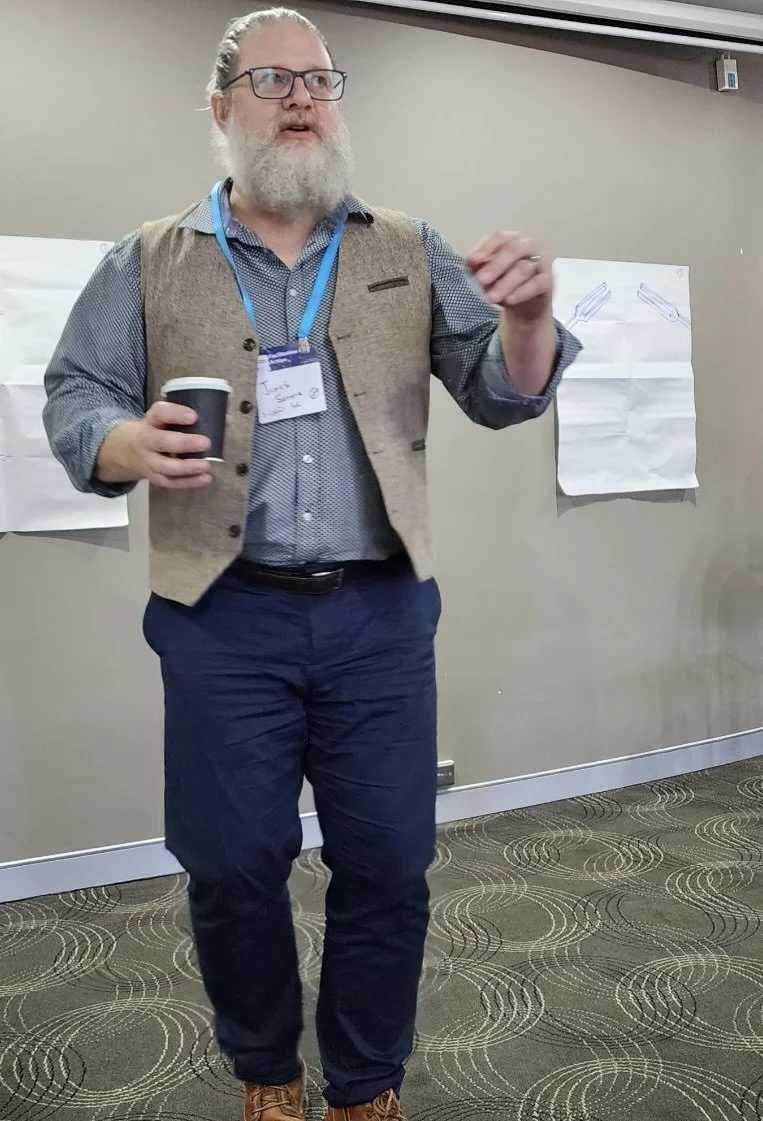
‘Facilitator as Steward of a community’
Returning to the Moment of Emergence
In that session on difficult facilitations, the breakthrough wasn’t because someone taught others. It was because practitioners opened themselves to learning from each other. It was messy, real, and generative.
If we want CoPs to matter in government and beyond, we must protect the conditions that make such moments possible. Not by controlling them, but by holding them lightly enough for them to live.