The Screwtape Letters
The Quiet erosion of integrity:
What C.S.Lewis teaches us about the formation of character
The Leadership Problem
We often imagine that failures of leadership begin with dramatic moments. A public scandal. A corruption inquiry. A catastrophic decision that suddenly reveals a person's true character. History, however, suggests something rather different. Long before those moments become visible, something quieter has usually been taking place beneath the surface.
Integrity is rarely lost all at once. More often, it is worn away through countless small compromises that seem entirely reasonable at the time. A difficult conversation is postponed because the timing feels wrong. A questionable decision is justified because it appears necessary. We begin telling ourselves stories that preserve our image of ourselves while allowing us, almost imperceptibly, to drift away from the standards we once intended to uphold.
The opposite is equally true. Courage, honesty, and compassion are seldom built through one heroic act. They are cultivated through ordinary habits that gradually become part of our character: choosing to tell the truth when exaggeration would be easier, remaining curious when certainty would feel more comfortable, paying attention to the quiet voice of conscience before it is drowned out by convenience or ambition.
This, I think, is the leadership problem that C.S. Lewis was exploring when he wrote The Screwtape Letters. He was not primarily interested in spectacular acts of good or evil. He was interested in the almost invisible processes through which ordinary people become the sort of people capable of either. His concern was not merely with behaviour, but with the formation of character itself.
THE BOOK IN ONE IDEA
The central insight of The Screwtape Letters is deceptively simple.
The greatest threats to our integrity rarely announce themselves dramatically. More often, they arrive quietly, disguised as reasonable compromises, understandable ambitions, justified resentments, or the comforting belief that "just this once" won't really matter. Over time these seemingly insignificant choices accumulate, gradually shaping not only our behaviour, but our character.
Lewis understood that we are constantly engaged in an internal conversation. We explain our actions to ourselves. We justify our decisions. We create narratives that allow us to preserve a favourable image of who we believe ourselves to be. The danger is not that we consciously choose to become less honest or less compassionate. The danger is that we slowly stop noticing the small departures from the person we intended to become.
This is what makes the book so enduring. Lewis is not asking us to watch for spectacular failures. He is asking us to become more attentive to the ordinary habits of mind that quietly shape our lives.
That insight has only become more relevant. We now understand, through psychology, behavioural science, and leadership research, that identity is not formed primarily by our aspirations. It is formed through repeated practice. We become, over time, what we repeatedly do, tolerate, excuse, and encourage.
Lewis saw this long before those disciplines emerged. He simply chose to teach it through satire rather than scholarship.
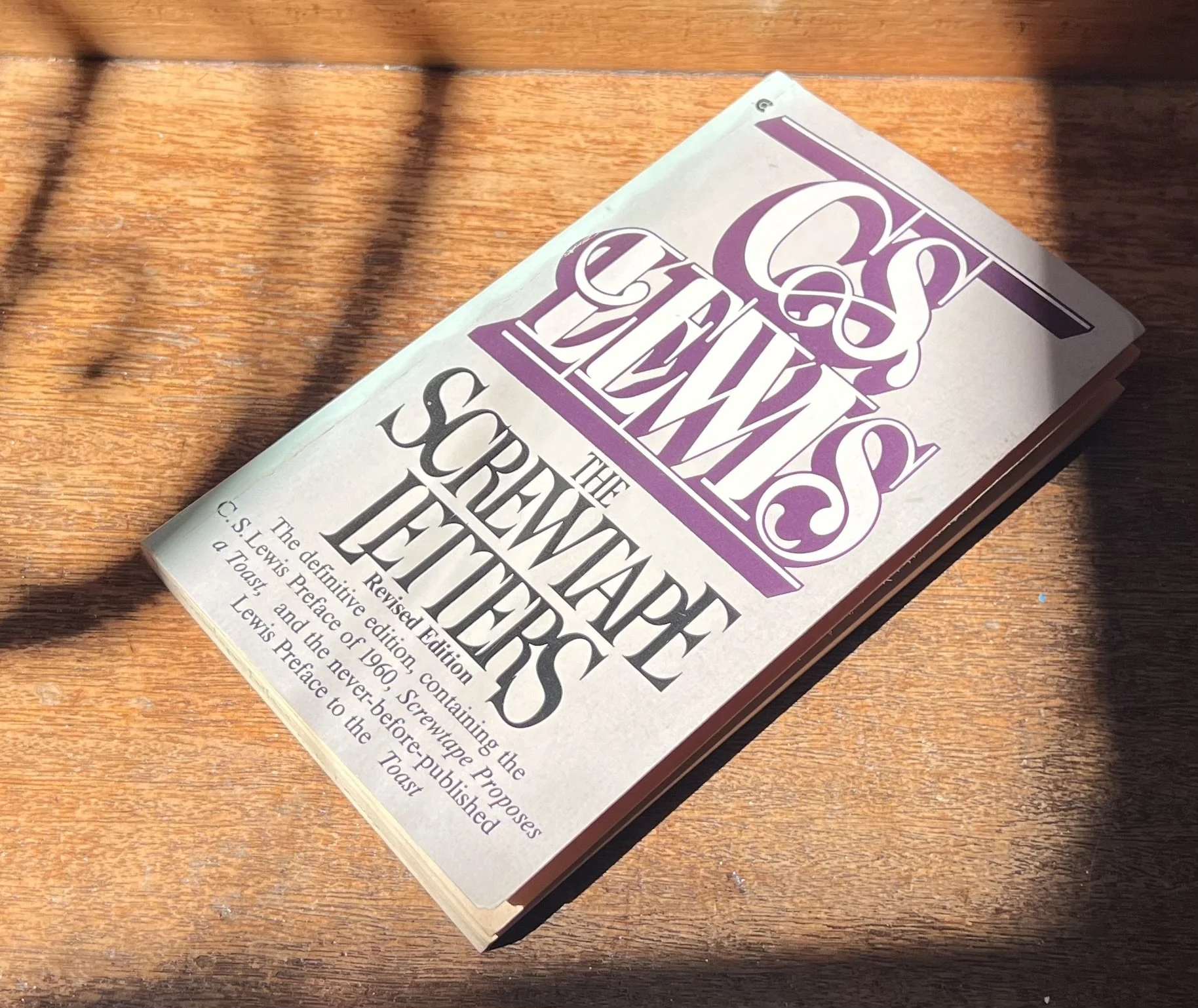
‘Letters from the lower-arch: written for us all’
From the Insightful Path Library
WHY THIS BOOK WAS WRITTEN
Lewis began publishing The Screwtape Letters in 1941, while Britain was enduring the Second World War. London had been bombed during the Blitz, Europe was engulfed in conflict, and questions of courage, obedience, sacrifice, and responsibility had become part of everyday life. It would have been natural for him to write directly about the politics of his age.
Instead, he chose to write about something more fundamental.
Lewis recognised that wars, institutions, and societies are ultimately shaped by the character of the people who inhabit them. Long before nations lose their moral bearings, individuals begin making small accommodations with their own conscience. Before public failures appear, private habits have already been formed.
Rather than writing another political commentary, Lewis turned his attention to the quiet processes through which human beings either cultivate integrity or gradually surrender it. His concern was not simply how evil appears in the world, but how ordinary people become susceptible to it.
That choice explains why the book continues to resonate more than eighty years later. The technologies have changed. Organisations have changed. Political systems have changed. Human nature has not.

‘Friends on the shelf’
The Chronicles of Narnia
From the Insightful Path Library
MY FIRST ENCOUNTER WITH LEWIS
Like many of my generation, I first encountered C.S. Lewis through The Chronicles of Narnia. As a child, I entered those stories simply because they were wonderful adventures. It was only much later that I came to appreciate the depth of the man who had written them.
As I worked my way through Lewis's essays, science fiction, fiction, and theological writing, I found myself returning most often to The Screwtape Letters. It struck me that Lewis possessed an unusual ability to observe the ordinary workings of the human mind. He understood how easily we confuse comfort with wisdom, busyness with purpose, and familiarity with truth.
The literary device he chose remains one of the most ingenious I have encountered. The book is presented as a series of letters from Screwtape, a senior devil, to his inexperienced nephew Wormwood. Every piece of advice is inverted. Virtue becomes failure. Temptation becomes strategy. The reader is invited to look at familiar experiences from the opposite direction.
Lewis's brilliance lies in the fact that the devils are never really the subject of the book. The subject is us.
By reversing the moral perspective, he enables us to recognise habits of thought that are usually invisible. We begin to notice our own rationalisations, our own quiet compromises, and our own capacity to drift away from the person we intended to become without ever consciously deciding to do so.

’The banality of evil’ 1963 Book: by Hannah Arendt on convicted Nazi, Adolf Eichmann,
WHEN ORDINARY PEOPLE STOP THINKING
Reading The Screwtape Letters today, one of the things that strikes me most is how closely Lewis anticipated insights that would later emerge from psychology, organisational behaviour, and political philosophy.
Perhaps nowhere is this clearer than in the work of Hannah Arendt.
In 1961, Arendt travelled to Jerusalem to report on the trial of Adolf Eichmann, one of the principal organisers of the Holocaust. Like many others, she expected to encounter a monster. Instead, she found an ordinary-looking bureaucrat whose repeated defence was that he had merely been following orders and fulfilling his responsibilities within the system.
What disturbed Arendt was not that Eichmann appeared exceptionally evil. It was that he appeared alarmingly ordinary.
She famously described this as "the banality of evil." Her argument was not that evil itself is banal, but that extraordinary harm is often carried out by ordinary people who gradually stop examining their own thinking. They become so absorbed in procedure, conformity, obedience, or career that they cease asking whether what they are doing is right.
Arendt observed that Eichmann had,
“...ceased to live according to... principles... and consoled himself with the thought that he no longer was master of his own deeds.”
It is difficult to read those words without hearing echoes of Lewis.
Both writers were interested in the same phenomenon: not spectacular wickedness, but the slow surrender of moral agency. Lewis explored it through satire. Arendt encountered it in history. Both remind us that the greatest danger is rarely that we consciously choose what is wrong. It is that we gradually lose the habit of asking what is right.
For leaders, that observation carries particular weight. Institutions depend upon procedures, policies, and delegated authority. These are necessary and often beneficial. Yet every system also carries a risk: that responsibility becomes so widely distributed that no individual feels personally accountable for the consequences of their decisions.
Leadership, then, is not simply about making decisions. It is about remaining awake while making them.
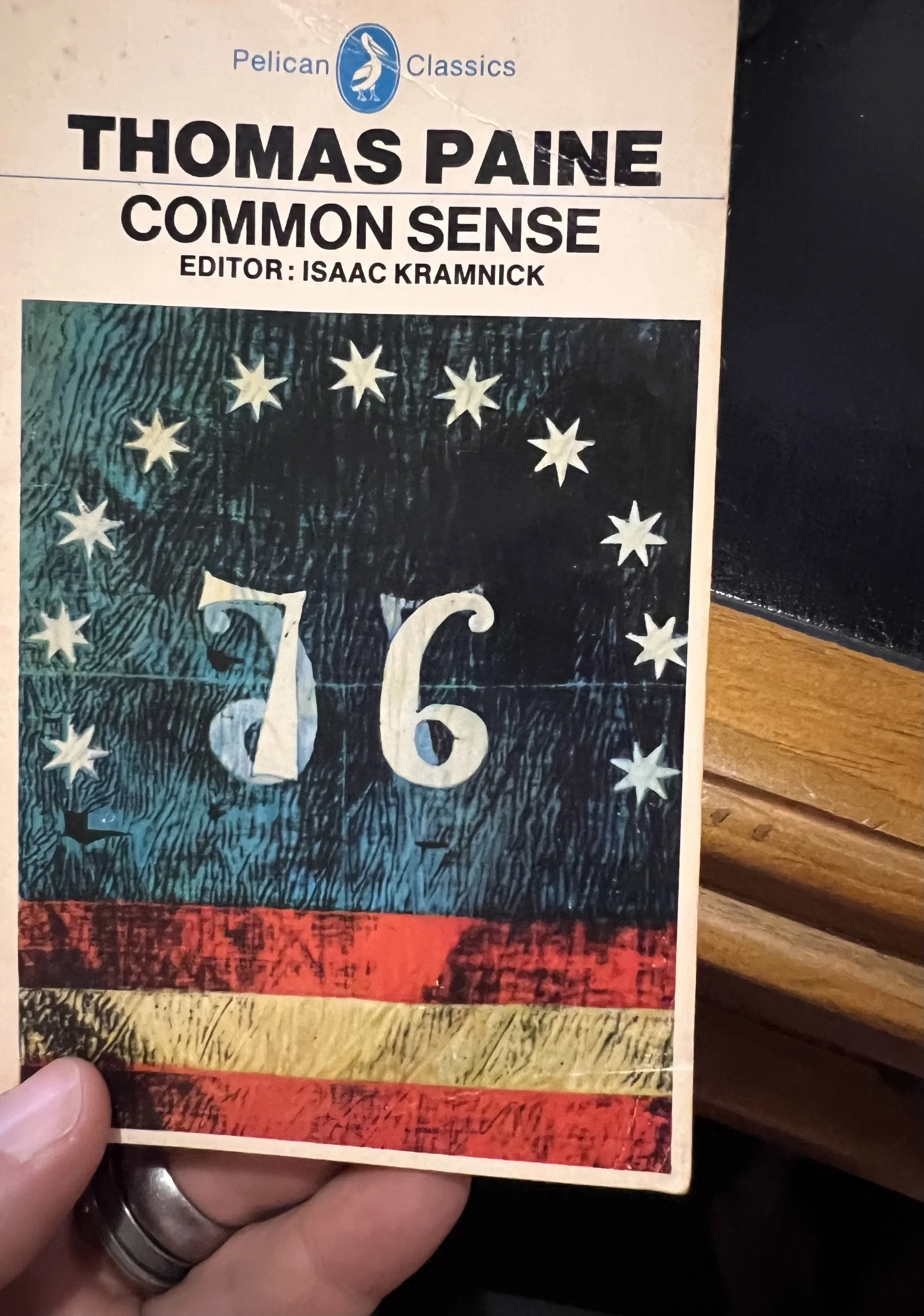
‘The courage to begin again’
From the Insightful Path Library
THE COURAGE TO BEGIN AGAIN
Long before Lewis or Arendt, another writer had wrestled with a similar question.
Writing in 1776, as the American colonies debated whether they should remain under British rule, Thomas Paine recognised that one of the greatest obstacles to meaningful change was not oppression itself. It was the human tendency to become accustomed to it.
People adapt.
They accommodate.
They learn to live with circumstances they once would have questioned.
That insight runs throughout Common Sense, but perhaps nowhere more powerfully than in Paine's enduring observation:
“We have it within our power to begin the world over again.”
It is one of the most hopeful sentences in political literature.
Paine was not suggesting that history could be erased, nor that change would come easily. He was reminding his readers that human beings retain the capacity to choose differently. Whatever habits, institutions, or assumptions have brought us to the present moment, they need not determine what comes next.
Lewis is making much the same argument, although at the level of the individual.
Every letter from Screwtape assumes that today's habits will become tomorrow's character. Yet the converse is equally true. Every moment of genuine awareness creates the possibility of interrupting that trajectory.
Neither writer invites complacency.
Neither invites despair.
Instead, both insist that the future is shaped through the ordinary decisions available to us today.
Paine also issued a warning that feels remarkably contemporary:
“I am inclined to believe that all those who espouse reconciliation ... may be included within the following descriptions: interested men, who are not to be trusted; weak men, who cannot see; prejudiced men who will not see; and a certain set of moderate men who think better of the world than it deserves — and this last class, by their ill-judged deliberations, will be the cause of more calamities than all the other three.”
It is not a comfortable passage to read. Nor should it be.
Paine's concern was that the greatest dangers to a free society often emerge not through active malice, but through passivity, misplaced optimism, or the reluctance to confront uncomfortable realities.
Lewis, writing more than a century and a half later, describes precisely the same pattern. The enemy is rarely dramatic temptation. More often, it is distraction, complacency, self-deception, and the gradual normalisation of compromise.
Both writers remind us that integrity is not maintained accidentally. It requires continual attention.
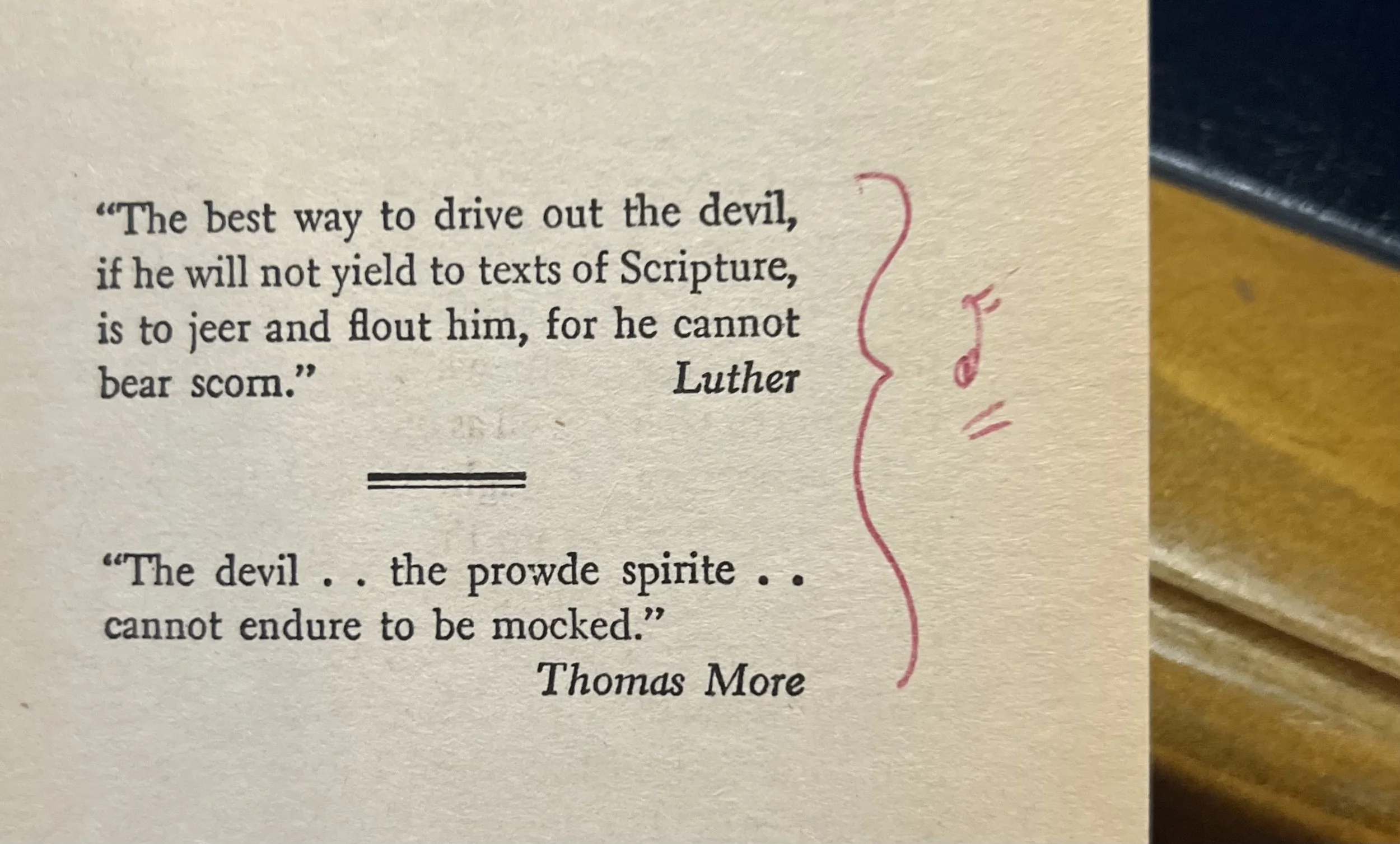
‘The devil cannot endure to be mocked’
Page 5, The Screwtape Letter,
From the Insightful Path Library
WHY SATIRE MATTERS
One of the things that has always fascinated me about The Screwtape Letters is that Lewis chose not to write a conventional theological treatise. He could easily have written a serious work explaining temptation, conscience, and virtue. Instead, he chose satire. He chose to laugh.
That choice places him within a much older tradition.
Martin Luther is often credited with observing,
"The best way to drive out the devil, if he will not yield to texts of Scripture, is to jeer and flout him, for he cannot bear scorn."
Thomas More expressed a remarkably similar sentiment, describing the devil as,
"...the proud spirit... [who] cannot endure to be mocked."
Both recognised something profound about human psychology. Fear grants power to whatever we fear. Humour, by contrast, creates distance. It allows us to recognise absurdity where once we saw inevitability.
Lewis employs precisely this strategy. He presents evil not as magnificent or mysterious, but as petty, bureaucratic, insecure, and faintly ridiculous. Screwtape is less a terrifying demon than a manipulative middle manager, endlessly frustrated by the ordinary decency of human beings and forever encouraging his nephew to exploit vanity, distraction, resentment, and pride.
The satire works because, before long, we stop laughing at the devils.
We begin recognising ourselves.
The bureaucratic language, the rationalisations, the quiet encouragement to avoid difficult truths, the endless distractions from what really matters; these are not simply literary devices. They are recognisable features of organisational life, public life, and private life. Lewis understood that humour could disarm our defences long enough for insight to emerge.
In that sense, The Screwtape Letters is less a comedy than an exercise in self-observation.
WHY IT MATTERS HERE
It would be easy to dismiss The Screwtape Letters as a religious allegory written for another age. The language is overtly Christian, the literary device is imaginative, and the cultural setting belongs to wartime Britain.
Yet beneath that surface lies a remarkably modern understanding of how people think.
Lewis repeatedly directs our attention toward the ordinary habits that gradually shape judgement. He notices how easily distraction replaces reflection, how resentment quietly grows when left unattended, how ambition disguises itself as responsibility, and how people become increasingly comfortable with compromises they would once have rejected outright.
Much of contemporary leadership research has arrived at similar conclusions, albeit through different methods. Behavioural psychology has shown how habits shape identity. Organisational scholars have demonstrated the influence of culture on ethical behaviour. Chris Argyris revealed the remarkable sophistication with which intelligent people defend themselves from uncomfortable learning. Daniel Kahneman explored the shortcuts and biases that influence judgement. None of these thinkers are saying exactly what Lewis said, but all point toward a similar observation: human beings are remarkably skilled at deceiving themselves.
That is why this book continues to matter.
Leadership is often discussed in terms of strategy, influence, communication, and decision-making. Lewis reminds us that beneath all of those lies something more fundamental: the continual formation of character.
Every leader develops habits of attention.
Every leader develops habits of justification.
Every leader develops habits of seeing, or not seeing.
Those habits rarely attract attention until they have already begun shaping the culture around them.
WHERE IT HOLDS / WHERE IT DOESN'T
Lewis's great strength is his understanding of the individual. He understood that our greatest vulnerabilities are often internal rather than external. Pride, complacency, self-deception, and the desire for comfort are not spectacular failings. They are ordinary human tendencies, and Lewis describes them with remarkable insight.
Where his account is less complete is in its treatment of systems.
Reading Lewis today, we know that people are shaped not only by their own choices, but also by the institutions they inhabit. Incentives matter. Organisational cultures matter. Group identity matters. The structures within which we work can either strengthen conscience or slowly erode it.
This does not weaken Lewis's argument. Rather, it complements it.
Douglas reminds us that institutions must remain worthy of the trust placed in them. Fortas reminds us that healthy democracies require space for dissent. Kennedy reminds us that courage sometimes demands standing against one's own constituency. Emerson reminds us to preserve independent judgement within systems that reward conformity. Lewis explains what is happening within the individual while all of these external pressures are at work.
Taken together, they suggest that integrity is never solely a personal achievement or solely an institutional achievement. It depends upon both.
Strong institutions require people of character.
People of character also require institutions that encourage them to remain so.
WHAT TO DO WITH IT
One of the reasons I continue returning to The Screwtape Letters is that Lewis never allows me to imagine that integrity is something I achieved long ago. Instead, he treats it as a living practice, one that must be renewed through attention, reflection, and the willingness to notice what is happening beneath the surface of my own thinking.
That, I think, is where this book becomes particularly valuable for leaders.
Leadership inevitably brings pressure. We work within institutions that reward efficiency, certainty, decisiveness, and loyalty. None of these are inherently problematic. In fact, they are often necessary. The difficulty arises when those legitimate demands gradually crowd out other equally important qualities: curiosity, humility, compassion, independent judgement, and the willingness to question our own assumptions.
Lewis invites us to slow down long enough to notice that process unfolding.
Rather than asking, "What decision should I make?" he encourages us to ask a prior question:
"Who am I becoming while I make it?"
That subtle shift changes everything.
Instead of concentrating solely on outcomes, we begin paying attention to the habits that produce those outcomes. We become interested in the stories we tell ourselves, the compromises we justify, the conversations we avoid, and the values we quietly place aside because the immediate circumstances seem to demand it.
Those are the places where character is formed.
Those are also the places where character can be renewed.
‘Temptation, footnoted’
From the Insightful Path Library
There are a few practices that I have found particularly helpful while reflecting on Lewis's work.
First, learn to notice your own rationalisations.
Whenever I hear myself saying, "Just this once,""That's simply how things work," or "There wasn't really another choice," I have learned to become curious. Those explanations are not always wrong, but they are often invitations to examine my thinking more carefully. Lewis reminds us that our greatest deceptions are usually the ones we tell ourselves.
Second, cultivate relationships that make honesty possible.
One of the striking features of The Screwtape Letters is how isolated the "patient" becomes from honest reflection. Lewis understood that people drift most easily when no one is able to ask difficult questions. Throughout my coaching work I have become convinced that psychological safety is not simply about making people comfortable. It is about creating relationships in which truth can be spoken with both courage and care.
Third, pay attention to what repeatedly captures your attention.
Lewis recognised that our lives are shaped less by occasional moments of brilliance than by the ordinary objects of our daily attention. What we repeatedly notice, resent, celebrate, fear, or pursue gradually becomes the architecture of our inner world. Leadership begins there, long before it appears in strategy documents or organisational charts.
Finally, practise beginning again.
One of the hopeful themes running quietly through Lewis's work is that no compromise is required to become permanent. Awareness creates choice. Every moment in which we honestly recognise our own unskillfulness is also a moment in which we can choose another path. Character is formed over time, but so too is character renewed.
WHO SHOULD READ THIS
This is a book for anyone interested in becoming more attentive to the formation of their own character.
Leaders will naturally recognise themselves within its pages, particularly those responsible for shaping organisational culture, influencing public policy, or stewarding institutions through uncertainty. Coaches, facilitators, teachers, and parents will also find much to reflect upon, because Lewis's observations reach well beyond formal leadership. They touch the ordinary relationships through which influence is exercised every day.
Perhaps most importantly, this is a book for people who suspect that the greatest challenges they face are not merely technical or strategic, but deeply human. Lewis offers very few techniques. What he offers instead is a way of seeing ourselves with greater honesty, humour, and compassion.
MY REFLECTION
What continues to draw me back to The Screwtape Letters is not its theology, although I respect that deeply. It is Lewis's extraordinary understanding of the gradual formation of identity.
As a coach, I spend much of my time sitting with leaders who are wrestling with questions of judgement, responsibility, conflict, and purpose. Rarely are they struggling because they lack intelligence. More often, they are trying to navigate competing loyalties, institutional pressures, uncertainty, and the quiet temptation to choose what is immediately comfortable over what they know to be right.
Lewis reminds me that these moments are rarely isolated events. They are chapters in a much longer story about who we are becoming.
That perspective has changed the kinds of questions I ask, both of myself and of those I work alongside. Rather than asking whether a particular decision is successful, I find myself asking whether it helps cultivate the sort of person capable of making wiser decisions tomorrow.
Perhaps that is the enduring gift of this remarkable little book. It teaches us to become students of our own character. Not so that we might judge ourselves more harshly, but so that we might live more consciously.
And in a world increasingly shaped by speed, distraction, and certainty, that may be one of the most important leadership disciplines we can cultivate.
CONTINUE YOUR EXPLORATION
The Screwtape Letters remains worth returning to because it reminds us that character is rarely shaped by moments of crisis alone. More often, it is formed through the ordinary habits, conversations, and compromises that gradually become our way of being. Lewis's reflections become even richer when read alongside authors who explore conscience, courage, freedom, love, and the continual work of becoming more fully human.
RELATED BOOKS
The Anatomy of Human Destructiveness – Erich Fromm
For readers interested in understanding how human beings become capable of extraordinary cruelty or extraordinary compassion, and why our deepest task is the cultivation of life rather than the pursuit of power.
Profiles in Courage – John F. Kennedy
For readers interested in the courage required to remain faithful to conscience when compromise would be easier, and the personal cost that often accompanies principled leadership.
Self-Reliance – Ralph Waldo Emerson
For readers interested in developing the independence of judgement required to resist conformity, think clearly, and remain true to one's own convictions.
RELATED INSIGHTS
Lewis's reflections on character, integrity, and self-awareness continue to influence my own thinking about leadership, coaching, and personal development. These essays explore similar questions from contemporary leadership, psychology, and lived experience.
Walking on the Floor of Mistakes — A reflection on why growth begins when we stop hiding our failures and allow them to become teachers rather than burdens. By learning to face our shadow honestly, we begin transforming regret into wisdom rather than allowing it to quietly shape us from beneath awareness.
Understanding Assertiveness — A reflection on the difference between fear, aggression, and the quiet courage required to act from integrity. Like Lewis, it explores the inner conversations that determine whether we retreat from difficult action or respond with thoughtful conviction.
Resistance to Change — A reflection on the hidden commitments and assumptions that quietly shape behaviour long before we recognise them. Drawing on Robert Kegan and Lisa Lahey's work, it examines how the stories we tell ourselves often become the greatest barriers to growth.
PUTTING THESE IDEAS INTO PRACTICE
Lewis reminds us that integrity is less a destination than a daily discipline of attention. His work continues to influence how I coach leaders, design learning, and facilitate conversations that invite people to examine not only what they are doing, but who they are becoming through doing it.
Executive Coaching — Supporting leaders to recognise the subtle habits of thought that shape their judgement, strengthening their capacity to lead with integrity, courage, and self-awareness.
Leadership Development — Designing experiences that cultivate reflection, moral discernment, and the practical wisdom required to navigate complexity without losing sight of deeply held values.
Facilitation and Learning Design — Creating environments where honest dialogue, thoughtful disagreement, and careful examination of assumptions become opportunities for learning rather than sources of defensiveness.
BEYOND THE BOOK
Lewis's insights have remained with me because they continually invite me back into the practice of self-examination, and the gradual formation of character, and the constant questioning of how do we become the sort of people capable of stewarding our selves, our institutions, and one another wisely?