The art of loving
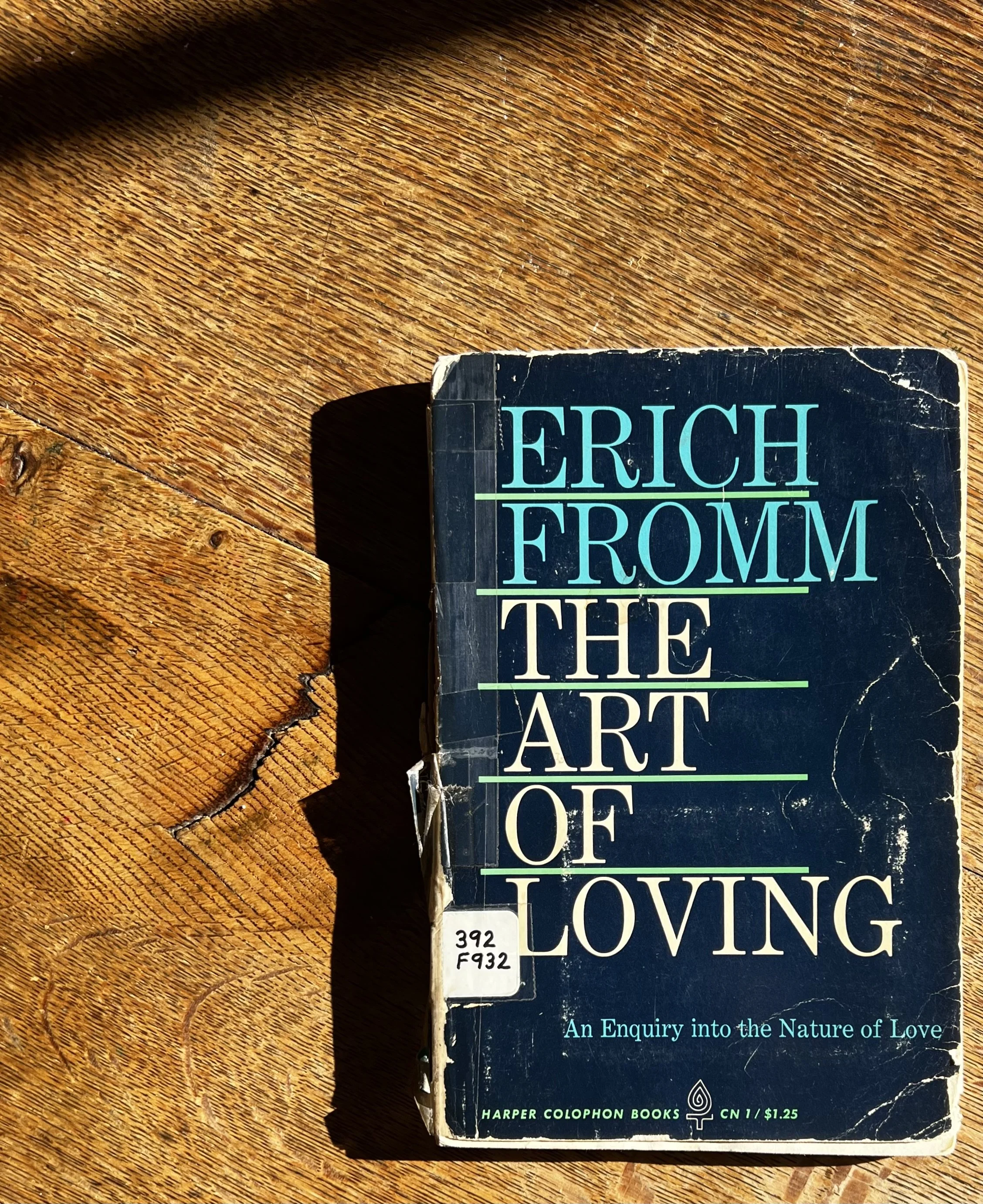
‘The Art of Loving’
From the Insightful Path Library
Erich Fromm’s The Art of Loving in an age of performance, platforms, and parenting… and consumerism
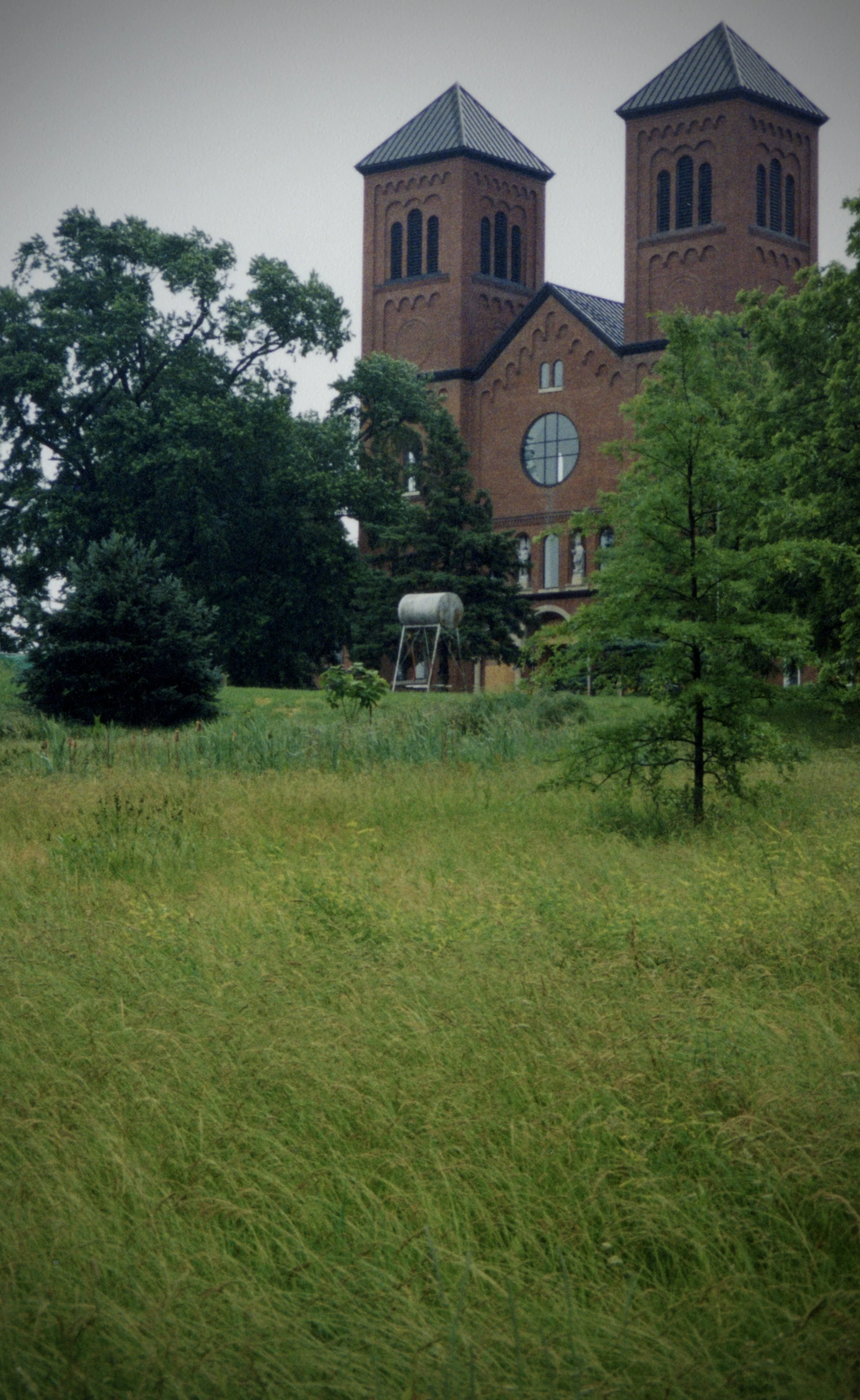
‘Somewhere in the Missouri grasslands’
Conception Abbey
Somewhere in northern Missouri, after weeks of walking across America, I crested a long hill through high grass, and saw against the setting sun, what I would later discover to be a Benedictine monastery. I remember stopping when I first saw it and wondering what insights I’d find there.
I had been walking for weeks by then. Small towns. Highways, back roads, and trails… heat, wind, and sore feet. And long stretches of silence. The sort of silence that slowly evaporates your inner monologue, until you start to feel like yourself again.
It was late afternoon, and I needed somewhere to camp for the night. Not really knowing what I was walking into, I asked whether I might be able to pitch my tent on their lawn. Being a seminary, they offered me more than that. They gave a room, hot showers, food, and conversation for a searching soul. And what was supposed to be an overnight stay, turned into almost two weeks, during which I genuinely contemplated monastic life.
After the first day or so I began observing the rhythm of the community. I took on chores, helped with the farm work, shared conversations with Brothers and priests, and slowly settle into the strange calmness of a life build around contemplation and discipline.
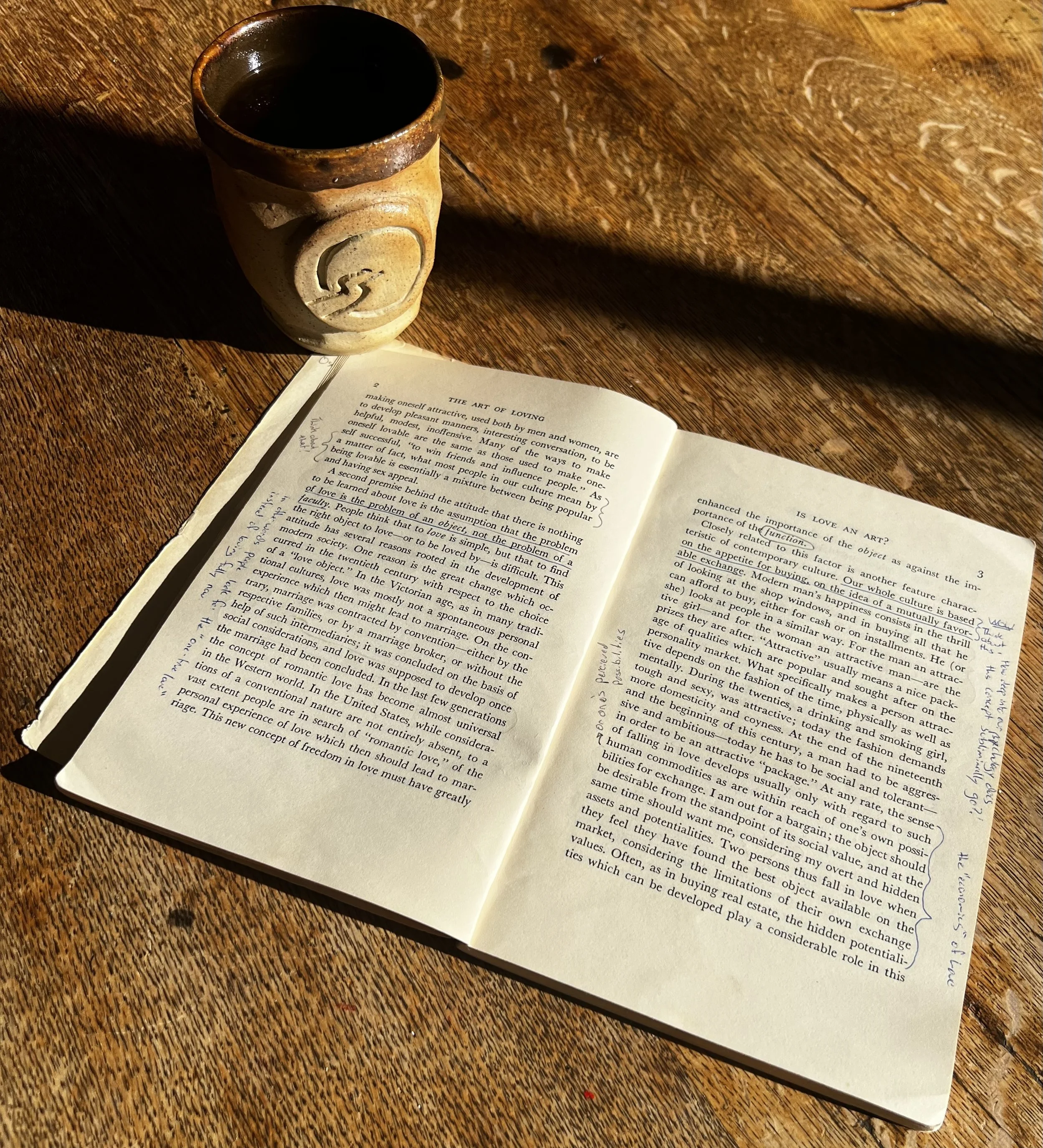
Being a bibliophile, I found my way to the library where they were clearing out old books and replacing them with newer copies, and one of the monks handed me a worn edition of Erich Fromm’s The Art of Loving.
At the time, it struck me as an unusual book to find in a monastic setting, where chastity was part of the rule.. but being encouraged to read it, I did… and discovered it was far more than romance. It became one of those books I now ‘gift’ to others who are starting to think seriously about marriage and commitment. And it is a book I continually return to, for guidance and reflection. My copy has pages that are now full of my handwritten notes. At the time, I read it as a man walking alone across a continent.
Now, rereading it years later as a father of kids who are growing up in the age of Instagram, Snapchat, and TikTok, I am finding new insights.
Not because Fromm changed.
Because the world did.
The Leadership Problem
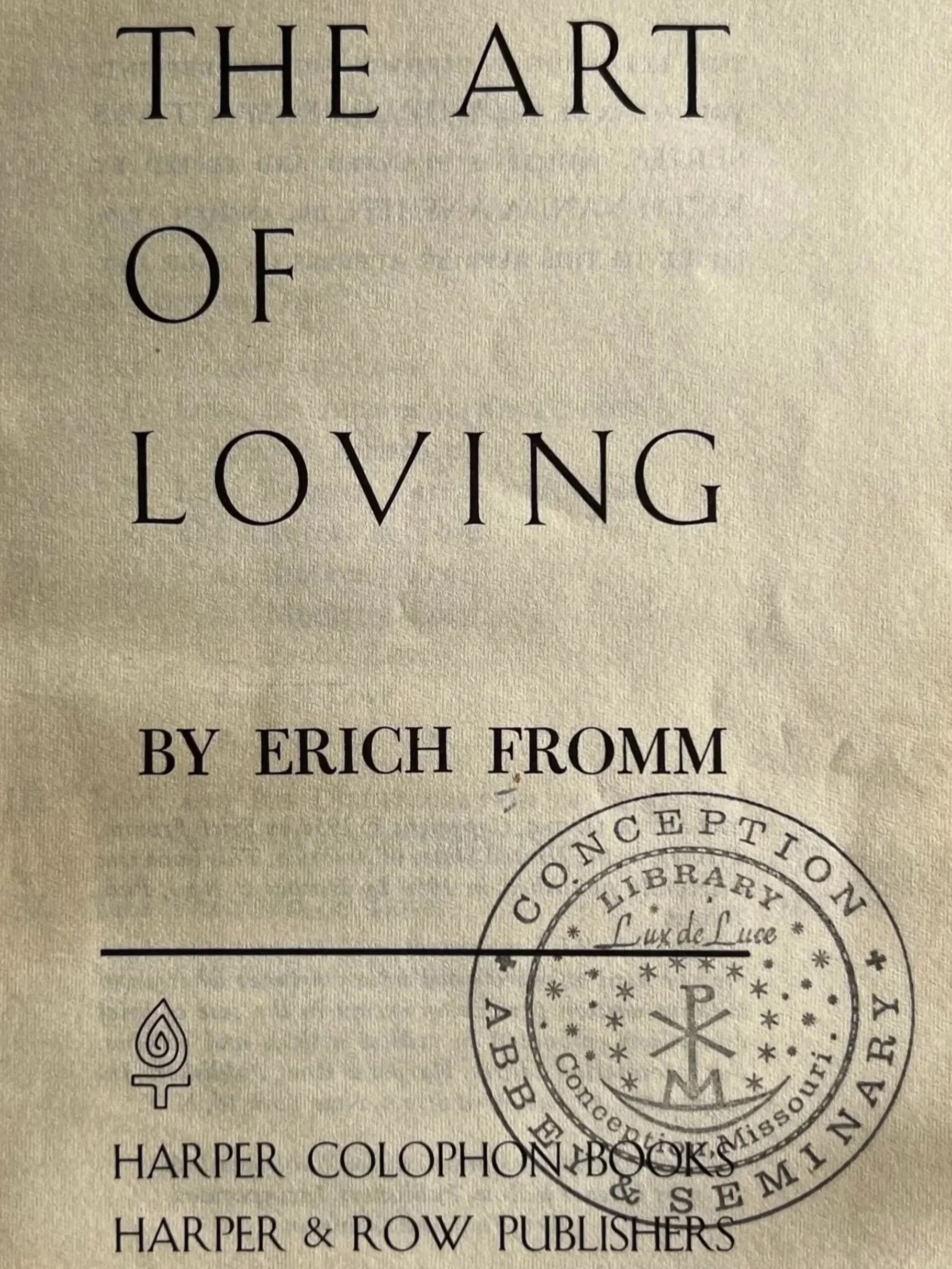
‘What travelled in my backpack’
(Now) From the Insightful Path Library
I’ve increasing come to believe that our culture teaches young people how to become desirable long before it teaches them how to love.
Indeed, we often avoid serious conversations about what Love actually is. Instead we expose our children to a constant stream of messages from entertainment, advertising, and social media that quietly shape their understanding of worth, intimacy, attraction, identity and success.
And we do this, often unknowingly, to the detriment of their mental health. That may sound dramatic, but I increasingly believe it is true.
Our culture relentlessly trains children (both girls and boys) to experience themselves as products: to be evaluated, displayed, optimised, compared, and consumed.
‘Beauty’ becomes performance. Attention becomes validation. And visibility becomes ‘worth’.
And this pressure arrives far too early; before many teenagers fully understand concepts such as intimacy, identity, sexuality, emotional maturity, or even themselves.
As a father, this troubles me deeply.
Not because I want my children to be hidden from the world, nor because beauty or attraction are somehow wrong.
But because I do not want them growing up believing their deepest value lies in how successfully they can market themselves to others.
Erich Fromm saw this problem long before smartphones existed.
Writing in the 1950s, he observed:
“What most people in our culture mean by being lovable is essentially a mixture between being popular and having sex appeal.”
Reading that today feels almost unsettlingly prophetic.
But Fromm’s critique went much deeper than romance or dating culture. He believed modern capitalism itself shapes human identity, and argued that modern society increasingly requires people who:
conform smoothly,
consume endlessly,
remain distractible,
feel independent while remaining controllable,
and experience themselves as marketable personalities.
He warned that human beings were becoming:
“expendable cogs in the machine.”
Not merely economically. Psychologically. He believed people increasingly experienced their bodies, personalities, talents,
relationships, and even emotions as investments designed to maximise social value and personal return.
Reading this now, in the age of algorithms, influencers, and personal branding, feels less historical than prophetic.
The Book in One Idea
‘Reading now through the lens of parenting’
From the Insightful Path Library
Fromm’s central argument is simple:
Love is not a feeling.
It is an art.
And like any art: it requires discipline, patience, practice, humility, attention, and courage.
Most people think love is something that happens to us. Fromm believed love is something we practice. That distinction changes everything.
Modern culture asks:
“How do I become lovable?”
Fromm asks:
“How do I become capable of loving?”
Those are radically different questions.
One turns us outward toward performance, while the other turns us inward toward character. And that may be the most important distinction in the entire book.
Because Fromm believed the deepest crisis of modern society was not loneliness alone.
It was alienation. Alienation from ourselves, from one another, from meaningful work, from nature, and from genuine human connection.
His argument is ultimately this:
a culture built primarily around consumption struggles to produce people capable of genuine love.
Why It Matters Here
Finding this book in a Benedictine monastery now feels strangely symbolic. Because monasteries preserve qualities the modern world increasingly erodes: silence, contemplation, discipline, repetition, devotion, stillness, presence. The modern attention economy runs on distraction. Love requires attention.
The modern world rewards performance.
Love requires sincere authenticity.
The modern world trains us to consume.
Love requires us to create.
Fromm’s critique goes deeper than technology. He believed modern consumer culture conditions us to approach everything as consumption: entertainment, spirituality, relationships, identity, and even ourselves.
He writes, ‘the world is one great object for our appetite’.
That idea stopped me when I first read it in the monastery library. Because it describes a society where people are no longer taught how to meaningfully participate in life, but instead how to endlessly consume it… attention, experiences, products, validation, distraction, and eventually even ourselves.
This is precisely the danger many teenagers now face.
Platforms built to monetize attention teach young people that their body is ‘content’, their image is ‘currency’, and their desirability determines their value.
This does not merely shape behaviour, it shapes identity. We absorb these messages long before we possess the maturity to critically examine them, and as a father, I increasingly think one of the most important things we can teach our children is this:
You are not a commodity.
Your worth is not determined by likes, followers, beauty, popularity, or attention.
And neither is love.
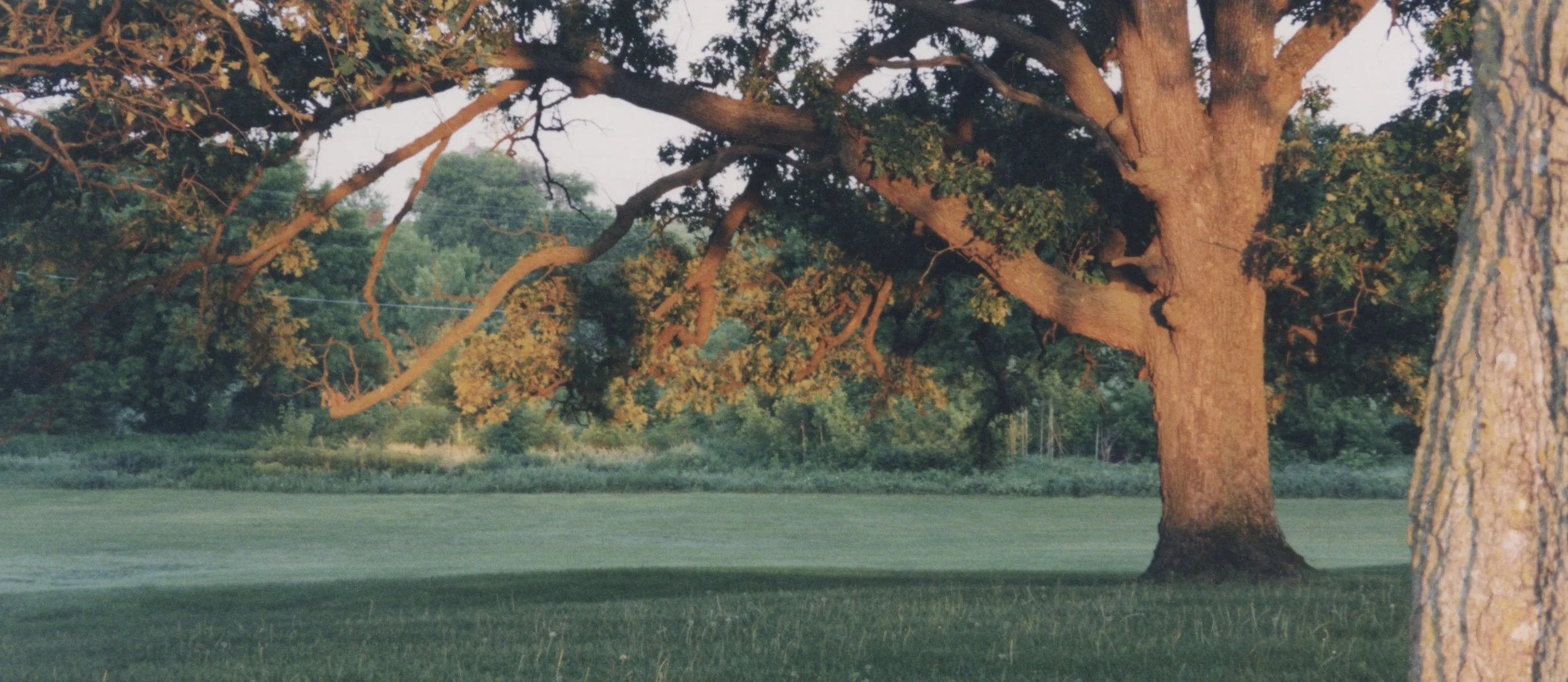
‘Worth is rooted in something deeper than visibility’
From the Insightful Path
Where It Holds, Where It Doesn’t
Fromm is not perfect. At times he can sound idealistic, and occasionally he writes with the broad certainty common to mid-20th century intellectuals.
Modern psychology would also add far more nuance around concepts of trauma, attachment, neurobiology, and emotional development.
And yet, despite all of that, his core diagnosis feels more accurate now than when he wrote it.
Especially this idea that:
capitalist culture slowly teaches people to experience themselves as marketable personalities.
In the age of ‘personal branding’, influencers, filters, and algorithmic self-presentation, that critique feels less outdated than prophetic.
What Fromm perhaps could not fully foresee was how early this conditioning would begin.
Not at twenty-five but at twelve, thirteen, and fourteen. Our children now navigate systems powerful enough to shape adult identity before adolescence is even complete. And many are trying to answer profound human questions that many adults still struggle with, such as:
Am I lovable?
Am I enough?
Do I matter?
And they are doing so using tools fundamentally designed to monetize insecurity. Fromm also warned that modern people often remain unaware of their own alienation because they are kept perpetually distracted by their work, entertainment, consumption,
and endless stimulation.
His comparison to Aldous Huxley’s Brave New World now feels eerily contemporary. Not oppressed through force, but sedated through amusement.
What To Do With It
Fromm does not offer easy solutions, but he does point toward practices.
Love, he argues, requires attention, discipline, presence, productive activity, and genuine connection.
That matters for parenting. I increasingly think our children need experiences that reconnect them with being human rather than merely performative. Things like:
cooking together,
walking together,
making things,
reading deeply,
practicing sport,
creating art,
learning patience,
learning solitude,
learning to be present without constant validation.
One of the passages I underlined most heavily in my monastery copy was Fromm’s idea that:
“One loves that for which one labors.”
I think there is deep wisdom in that.
We learn love not merely through emotion, but through care, effort, responsibility, and attention. The same way we learn craftsmanship. The same way we learn Aikido. The same way we learn to become fully ourselves.
Fromm writes:
“While we teach knowledge, we are losing that teaching which is the most important one for human development: the teaching which can only be given by the simple presence of a mature, loving person.”
I have thought about that sentence often. Because children do not merely listen to what we say about love.
They absorb:
how we regulate emotion,
how we handle conflict,
how we speak to others,
how we speak to ourselves,
what we worship,
what we prioritize,
and whether we ourselves know how to be present.
In many ways, parenting is not merely instruction. It is embodiment.
Who Should Read This
This book matters for:
parents,
teenagers,
teachers,
coaches,
leaders,
therapists,
and anyone trying to remain human inside systems that constantly encourage performance over presence.
Especially parents. Because many kids are now being taught (subtly and relentlessly) that ‘visibility’ is ‘value’.
And that confusion can wound deeply.
Fromm offers another possibility; that love is not something earned through marketability, but something practiced through humanity.
He reminds us that a healthy society is not merely one that produces wealth, efficiency, and entertainment.
It is one that produces human beings capable of integrity, courage, presence, care, and genuine connection.
Closing Reflection

‘On the road'
From the Insightful Path
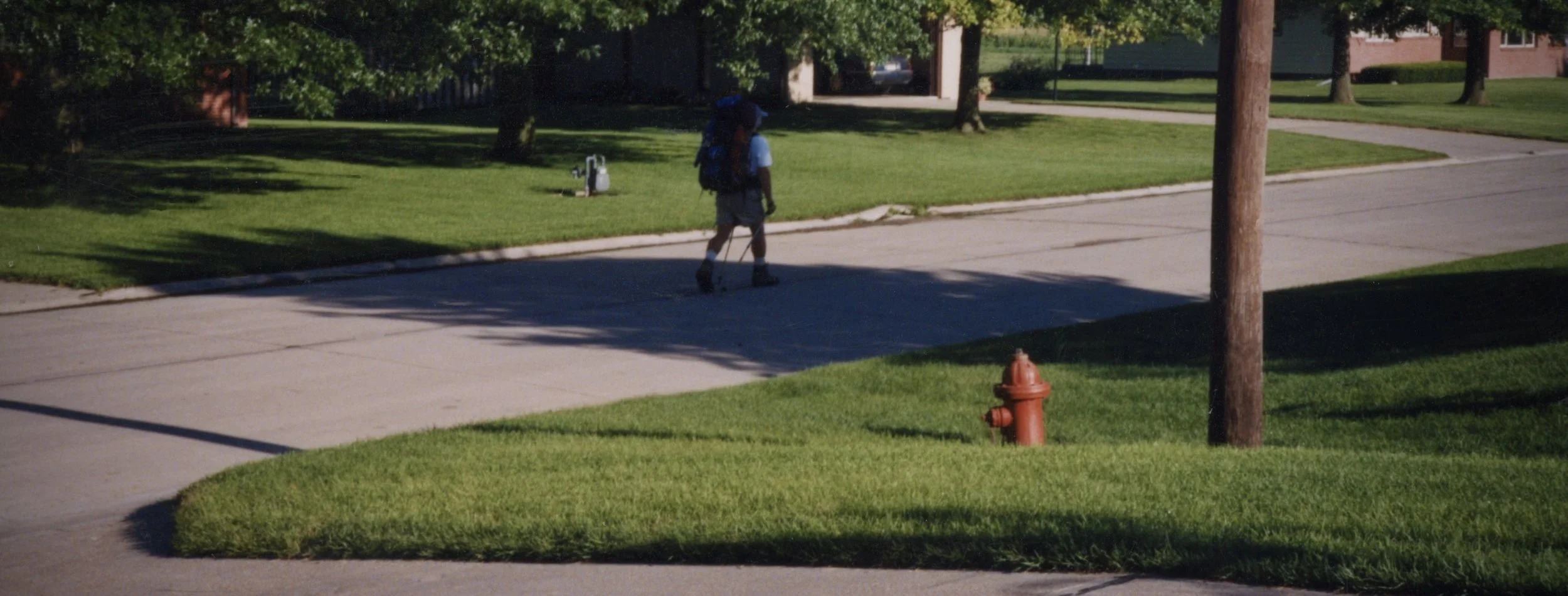
When I left Conception Abbey and continued walking west, I carried that old copy of The Art of Loving in my pack.
At the time, I thought I had simply found an interesting book. Now I think the book found me at exactly the right moment. Not because I understood it fully then, but because some books can provide different insights to you as you grow with them. Especially after you grow and return to them, and for me, especially after watching my kids navigate a world trying to convince them they are more than mere ‘products’ and that their main mission is to discover who they are outside of relationship (with me, with their parents, with their friends).
And perhaps that is why the monastery itself now feels important in retrospect.
Because it stood as a quiet counterpoint to everything Fromm warned about; distraction, consumption, performance, speed, and endless appetite.
It was a place organized not around consumption, but formation.
Not around visibility, but presence.
A Final Thought
One of the quiet tragedies of modern life is that many people spend years trying to become desirable without ever learning how to love. Erich Fromm believed love was not primarily about romance, attraction, or emotional intensity. He believed it was about becoming the sort of person capable of care, respect, responsibility, attention, and genuine presence.
A practiced way of being. An art. And perhaps that is what I carried out of the monastery all those years ago.
Not merely a book.
But a question I am still learning how to answer.
CONTINUE YOUR EXPLORATION
The Art of Loving is worth returning to because it invites us to reconsider one of the most important questions we can ask ourselves: not "How do I become loved?" but "How do I become capable of loving?" Fromm argues that love is not simply an emotion to be experienced, but a discipline to be practised, one that shapes our character, our relationships, and the kind of society we create. His reflections become even richer when read alongside other works that explore meaning, mastery, and the lifelong work of becoming more fully human.
RELATED BOOKS
No single book captures the challenges of protecting free societies. Douglas explores how institutions can gradually lose legitimacy when freedom, participation, and moral imagination are eroded. His ideas become even richer when read alongside authors who examine courage, conscience, power, and democratic responsibility.
Man's Search for Meaning– Viktor Frankl: For readers interested in how love, like meaning, asks us to move beyond ourselves in service of something greater.
The Anatomy of Human Destructiveness- Erich Fromm: For readers interested in the forces that diminish our humanity, and how the capacity to love stands in contrast to the forces of domination and destructiveness.
Mastery - George Leonard: For readers interested in understanding love not as a feeling alone, but as a lifelong discipline requiring patience, practice, humility, and continual growth.
RELATED INSIGHTS
The questions Fromm raises continue to influence much of my own writing. They appear whenever I explore leadership, parenting, identity, learning, or the conditions that help people become more fully themselves. These reflections approach those same questions from different perspectives.
The work of becoming: A reflection on how art, attention, and patient practice shape not only what we create, but who we become.
Learning what cannot be taught: A reflection on humility, practice, and why geninelearning requires us to become people, not simply accumulate more knowledge.
Understanding Assertiveness: A reflection on integrating strength with compassion, and why mature love requires the courage to protect what matters without surrendering to domination or fear.
Walking on the floor of Mistakes: A reflection on how facing our shadow, rather than denying it, becomes part of the lifelong work of becoming more fully human.
PUTTING THESE IDEAS INTO PRACTICE
Fromm reminds us that love is not simply an emotion, but a disciplined way of relating to ourselves and others. His ideas continue to influence how I support leaders, parents, and organisations seeking to cultivate healthier relationships, stronger communities, and more human ways of working.
Executive coaching - supporting leaders to develop the self-awareness, emotional maturity, and relational capacity needed to build trust, strengthen relationships, and lead with genuine care.
Leadership development-helping leaders cultivate cultures grounded in respect, responsibility, presence, and the growth of others rather than performance alone.
Facilitation and its design - creating learning environments where people feel safe to learn, connect authentically, and develop the relationships that make meaningful collaboration possible.
BEYOND THE BOOK
The ideas in The Art of Loving extend well beyond romantic relationships. They continue to shape my understanding of parenting, leadership, learning, community, and the kind of presence required to help others flourish. More than almost any other book in my library, Fromm reminds me that becoming fully human is itself a lifelong practice.