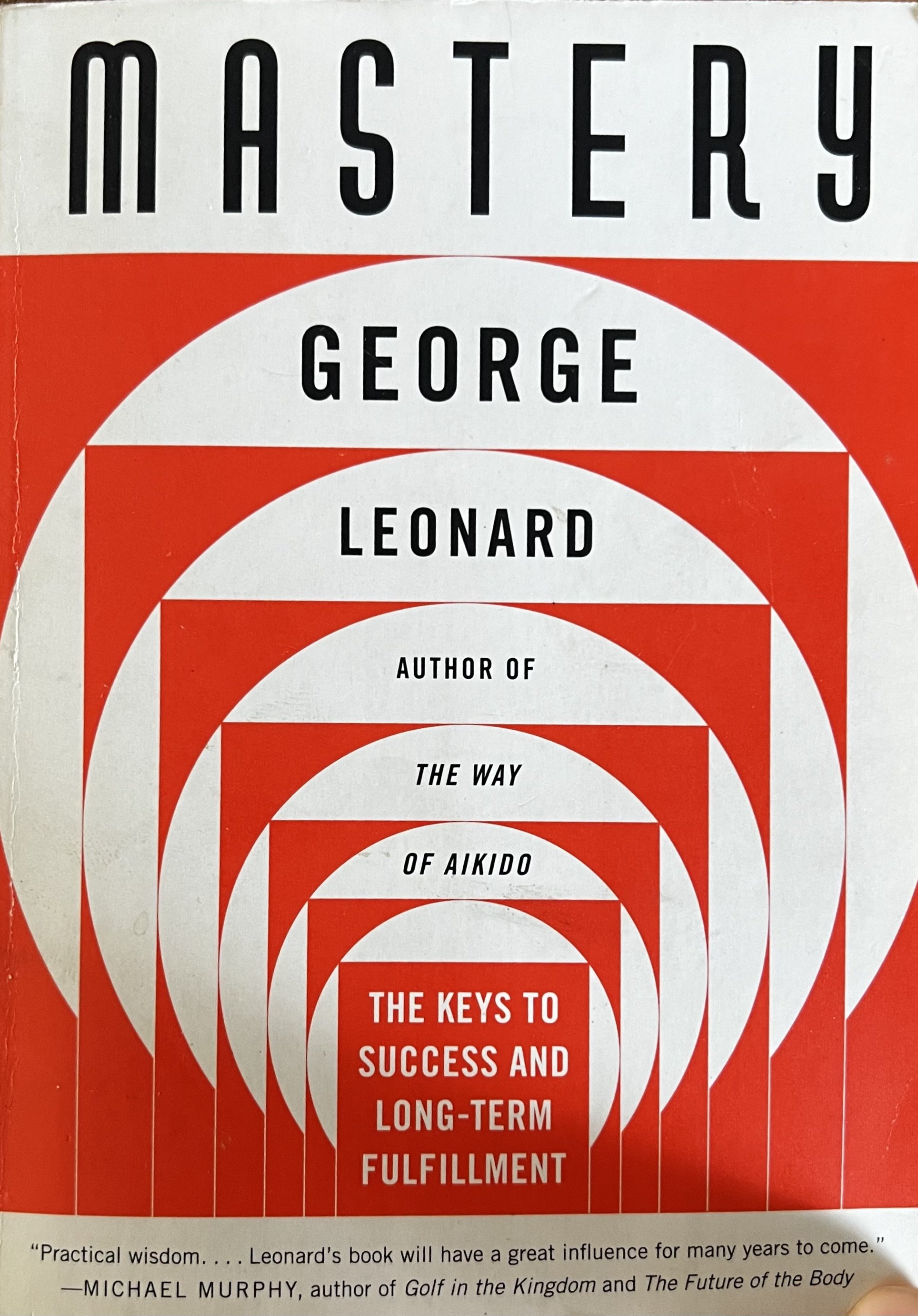
Mastery:
The keys to success and long term fulfillment
In a world where we are continually bombarded with promises of immediate gratification, instant success, and fast temporary relief, all of which lead in exactly the wrong direction, it can seem as though the modern world can be viewed as a prodigious conspiracy against the attainment of mastery.
But we need not give up hope. The path to mastery has been walked for millennia. It remains open to anyone willing to embrace the discipline, patience, and humility that genuine learning requires.
Mastery by George Leonard is a book about the process of achieving mastery in any field, whether it's art, sports, or personal development. Leonard emphasizes that mastery is not about quick success or shortcuts but a lifelong journey of continuous improvement.
George Leonard, an Aikido Sensei (instructor), navy pilot describes mastery as:
“…the mysterious process during which what is at first difficult becomes progressively easier and more pleasurable through practice… ”
This book is on my ‘Syllabus for Life’ - as it helps one on their path toward the insights that enable their thriving.
Leonard’s Central Argument
Mastery is not about achieving excellence quickly, but about embracing the lifelong disciplines through which excellence gradually emerges. Leonard argues that what transforms us is not talent or intensity, but the willingness to remain a learner through years of practice, plateaus, and continual refinement.
He develops this argument through several interconnected ideas:
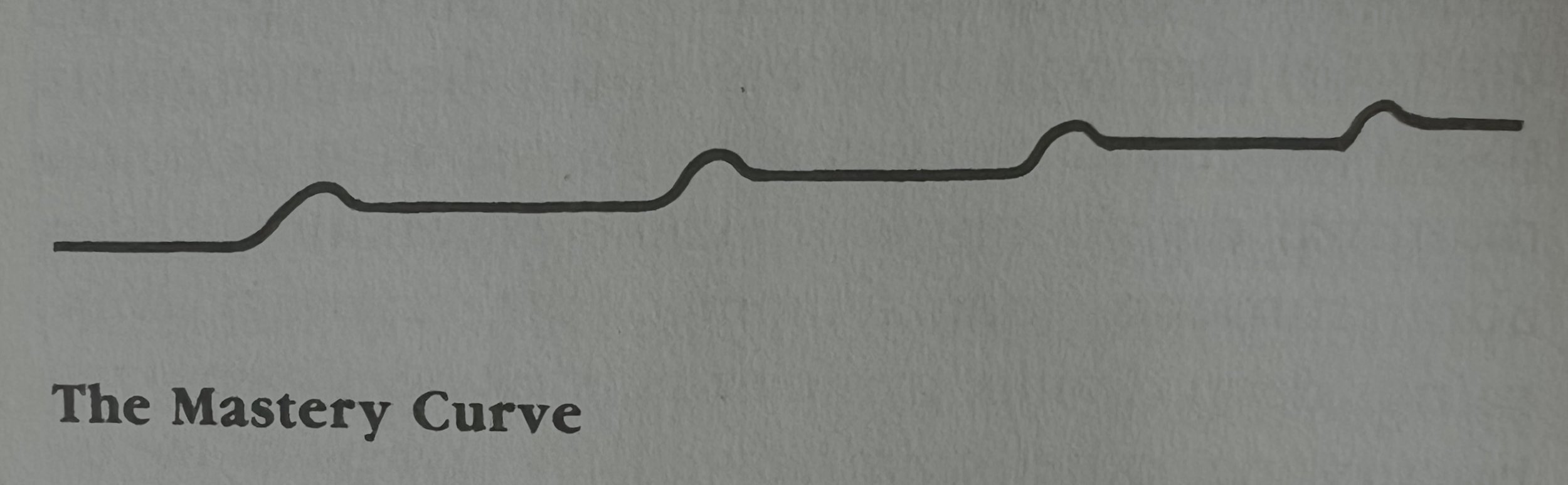
The Mastery Curve: Leonard describes the learning process as gradual incline, intersected with short sharp rises, and longer plateaus. Mastery, Leonard maintains, isn’t about constant progress—it’s about persistence, especially during times when improvement seems slow or stagnant. These plateaus are a natural part of the learning process and should be embraced rather than avoided.
Five Keys to Mastery:
Instruction: If you are to walk the path of mastery, you must, as much as possible, do so as a learner. Learn from experts and mentors who can guide and teach you the fundamentals. But go, not to be taught, but consciously to LEARN.
“Do not think that this is all there is. More and more wonderful teachings exist - the sword is unfathomable.”
Practice: Consistent, deliberate practice is essential. It’s not about practicing for the sake of practicing, but about how you approach practice, until you can see that there is joy in the striving for improvement each time you practice.
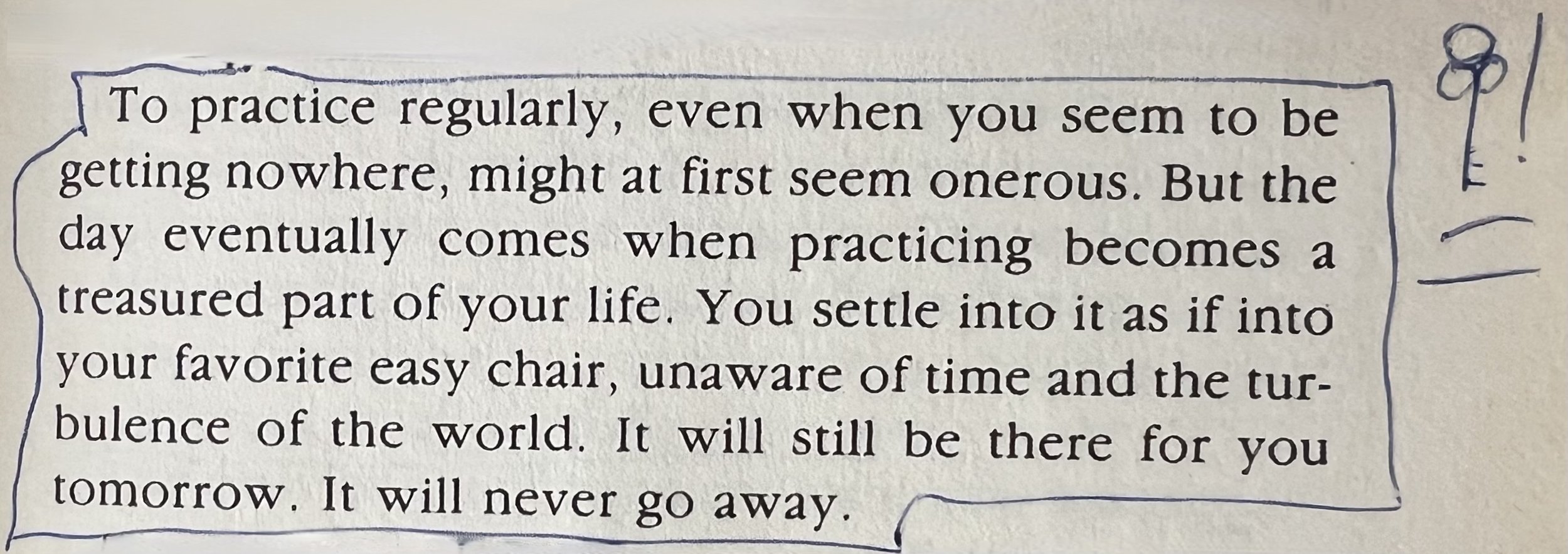
Leonard : 1991:79
Surrender: This is one of the most difficult for many - as it is about letting go of ego and impatience. You must accept that mastery takes time, and if you are concentrating on the goal, rather than the journey, you will fall behind. Mastery requires a humble mindset.
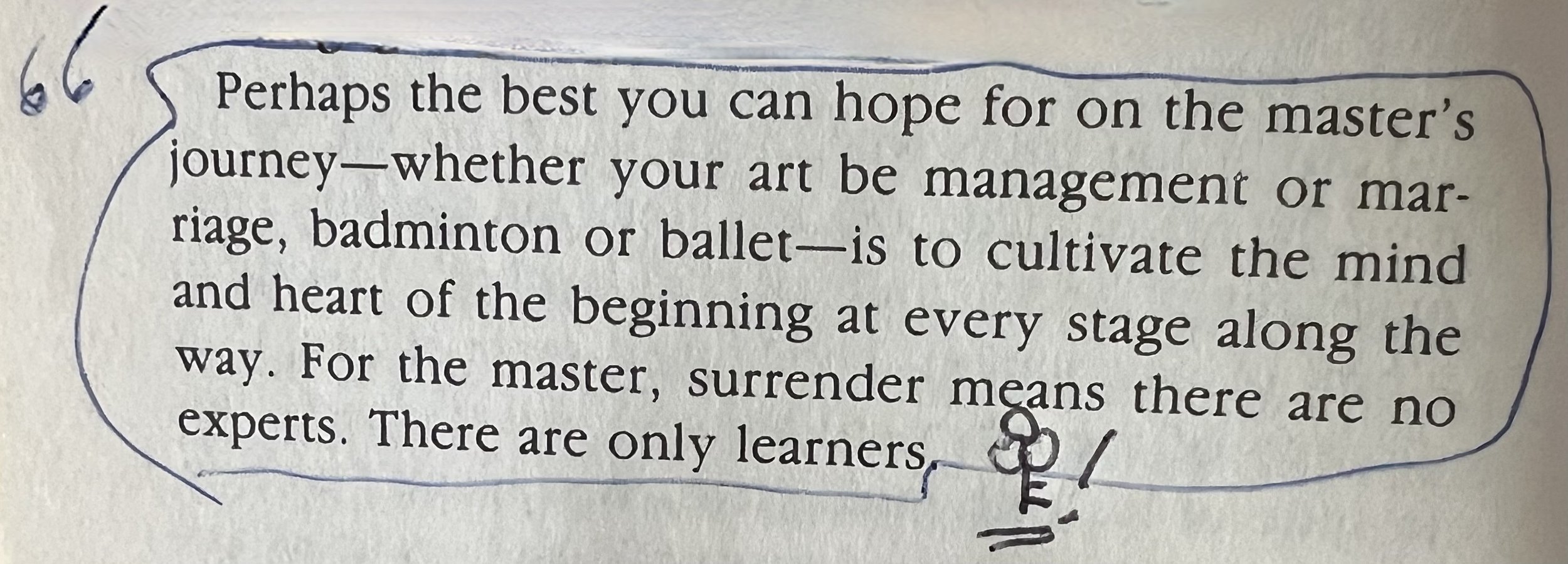
Leonard : 1991:88
Intentionality: Developing one’s ability to visualise, to use one’s willpower to visualise the potential mastery in order to build confidence and overcome doubt. Intentionality enables the student to ‘feel’ the possible, and get out of their own way (mentally) to make it happen.

Leonard : 1991:96
The Edge: Once you have learned the basics, mastery requires you to expand your comfort zones. You must be moving outside of the known, and pushing yourself to the limit. This comes with risk, but mastery is about the preparation prior to the risk.
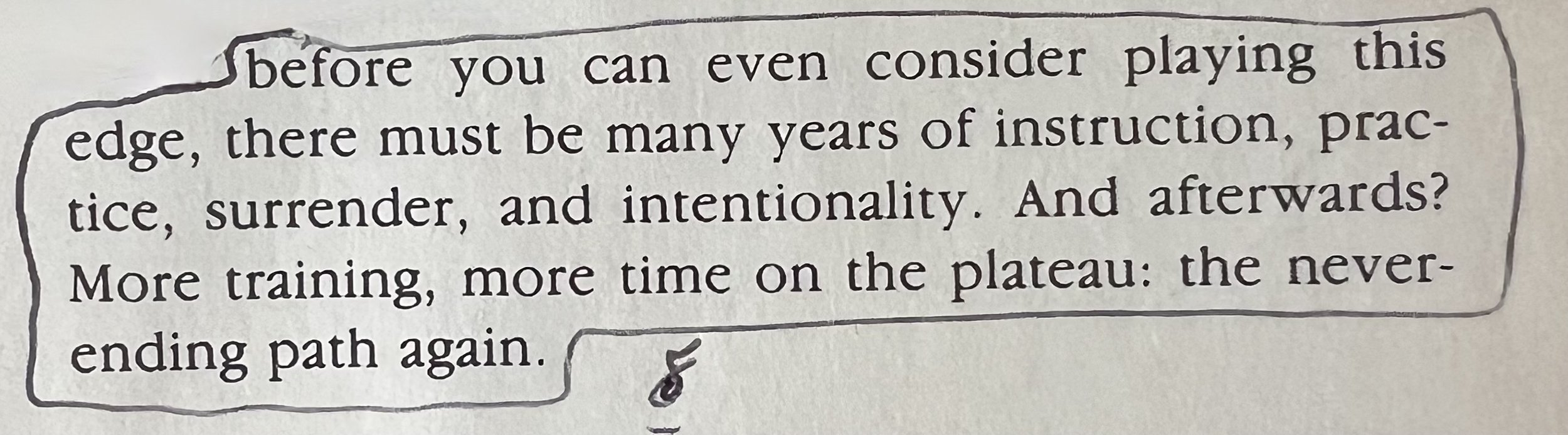
Leonard : 1991:101
Mastery is not easy to gain. (If it were, many more would be considered masters). However, if you can find the passion in whatever your art form is, be it management, leadership, tennis, Aikido, or painting, mastery awaits you.
A Lifestyle of Mastery: Leonard describes mastery as a way of life rather than a goal. It’s about developing habits, mindsets, and practices that help you grow continually and experience personal transformation.Overall, Mastery is about embracing the journey rather than focusing on the end result. It’s a book that encourages persistence, patience, and passion for continuous self-improvement.
There is, across this book, the exploration of a very real juxtaposition - that being that the ‘efforting’ to attain mastery is both required and an obstacle to the acquisition of mastery. You must not loose sight of the end goal, but you must not attach to it either.
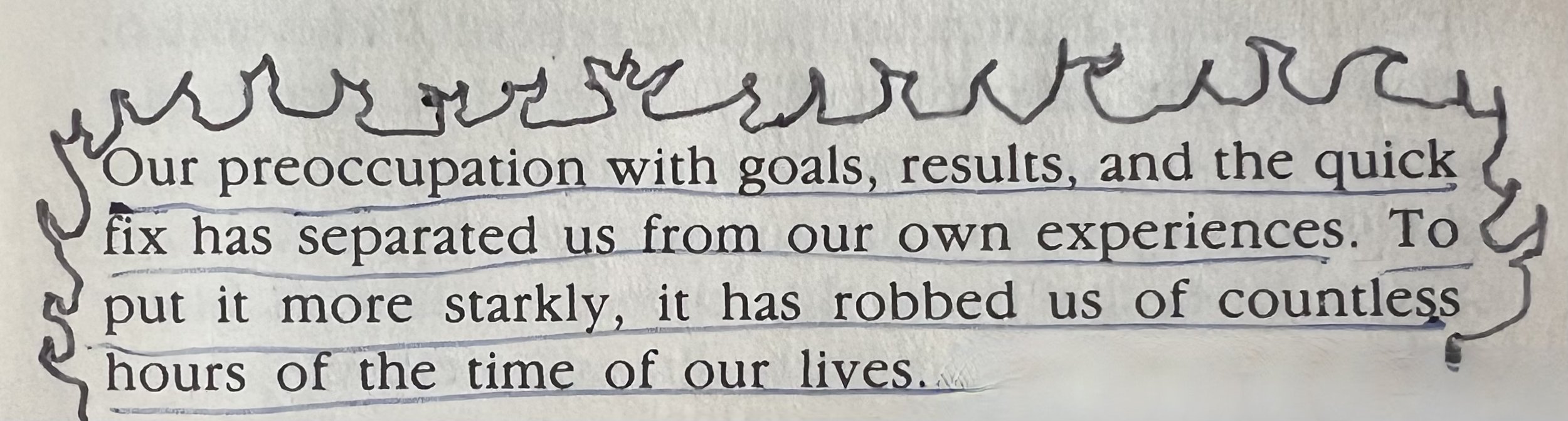
Leonard : 1911:141
Mastery: The keys to success and long-term fulfillment, George Leonard, 1991, Plume Books (Published by the Penguin Group)
My Reflection
I first encountered Mastery through Aikido, but I've found its lessons equally applicable to facilitation, executive coaching, and even woodcarving. In each of these pursuits there have been long plateaus where improvement was almost invisible. Looking back, however, those plateaus were often where the deepest learning occurred.
Leonard helped me see that the absence of obvious progress is not evidence that learning has stopped. More often, it is evidence that learning is becoming embodied. The habits are settling into us more deeply than conscious thought, until what once required deliberate effort is gradually becoming part of who we are. In that sense, mastery is not simply the acquisition of skill, but the gradual formation of character. That insight has helped me remain patient during periods when progress felt slow, trusting that mastery is measured not by constant improvement, but by continued practice.
Related Books
No single book captures the whole journey towards mastery. Leonard explores the discipline of lifelong practice, but his ideas become richer when read alongside authors who examine meaning, discernment, and the lifelong formation of character.
Self-Reliance - Ralph Waldo Emerson: For readers interested in developing the independent judgement and self-trust required to continue learning long after external instruction has ended.
Man’s Search for Meaning - Viktor Frankl: For readers interested in how purpose enables us to endure the long plateaus of practice and remain committed to work that matters.
The art of Loving - Erich Fromm: For readers interested in understanding mastery as a discipline of character, where love, like any worthwhile practice, requires patience, humility, and continual growth.
RELATED INSIGHTS
Leonard's reflections on mastery continue to shape my own thinking about learning, leadership, identity, and the lifelong discipline of practice. These essays explore how genuine growth requires more than acquiring knowledge; it requires becoming the kind of person who is willing to keep learning.
Learning What Cannot Be Taught: A reflection on why humility, rather than intelligence alone, is the foundation of lifelong learning, and how genuine mastery requires the willingness to be changed by practice.
One foot in front of the other: A reflection on how consistency, disciplined practice, and small daily commitments quietly shape both character and mastery.
Putting these ideas into practice:
Leonard reminds us that mastery is not an event but a lifelong practice. His ideas continue to influence the way I design learning, coach leaders, and help individuals develop the habits, disciplines, and self-awareness required for lasting growth.
Executive coaching -supporting leaders to cultivate the habits of reflection, disciplined practice, and continuous learning that enable sustained growth throughout their careers.
Leadership development -designing experiences that move beyond knowledge transfer towards the development of judgement, character, and embodied capability through practice.
Facilitation and its design - creating learning environments where practice, reflection, experimentation, and feedback become integral to how individuals and teams continue to grow.
Beyond the book
The ideas in Mastery extend far beyond any single discipline. Leonard's understanding of lifelong practice continues to shape how I approach leadership, coaching, facilitation, and creative work. More than any particular technique, he reminds me that mastery is not simply about becoming more skilful, but about allowing our practice to shape who we become.
My artwork - A reflection on how carving has become a teacher of patience, presence, and the slow, often surprising process through which practice shapes not only our work, but who we become.