The strength we need
In coaching leaders over the years, I've noticed something that initially seemed paradoxical.
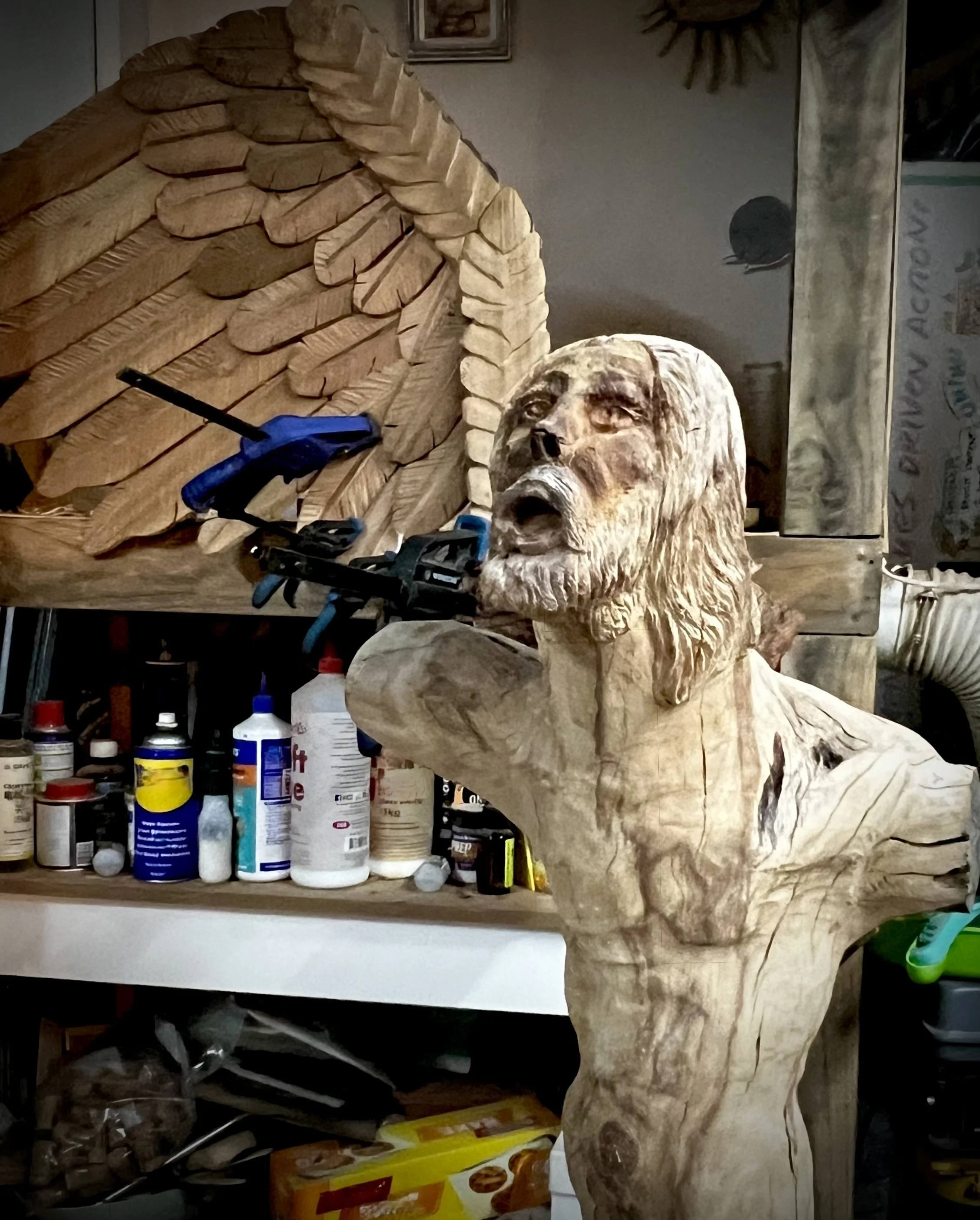
‘Wrestling with Daedalus’
Insights of Art - Wood Studio
The leaders who are most uncomfortable with their own aggression are often the very people who struggle to protect what matters most. They hesitate to establish boundaries, delay difficult decisions, and tolerate behaviours they know are harmful. In trying to avoid becoming controlling, they sometimes surrender the very strength that leadership requires.
For a long time I assumed the answer was confidence. Or courage.
Now I wonder whether it is something else entirely.
It was this question that eventually drew me to Erich Fromm's The Anatomy of Human Destructiveness. While many psychologists tried to explain why human beings become violent, Fromm asked a quieter, and perhaps more important, question. Why do some forms of aggression protect life while others seek to destroy it?
If you are interested in Fromm’s life, the broader themes of the book, and why it remains one of the twentieth century’s most important works on human nature, I’ve written a separate review of The Anatomy of Human Destructiveness here.
Fromm’s answer was that we have confused two fundamentally different human capacities.
One is what he called benign aggression. It is adaptive, protective, and in service of life. It is the parent stepping between danger and a child. It is the citizen willing to defend justice. It is the leader who says, "This behaviour is harming people, and it stops here."
The other is malignant aggression. It no longer exists to protect life. It seeks power through fear, domination, and submission. Where one establishes boundaries so that people may flourish, the other creates enemies so that people remain dependent.
At first glance, the distinction appears straightforward.
In practice, I think it is one of the most important leadership challenges of our time.
Across organisations, communities, and nations there is a growing hunger for strength. People long for leaders who will protect what matters, make difficult decisions, and provide a sense of safety in uncertain times. That longing is neither irrational nor dangerous. In many ways, it is deeply human.
The difficulty is that when we become disconnected from healthy forms of strength, we also become less discerning about the kind of strength being offered. If we cannot imagine protective leadership, we become vulnerable to performative leadership. If we cannot recognise courage, we are more easily persuaded by certainty. If those capable of defending what is good remain silent, others rarely leave the space unoccupied.
This, I suspect, was one of Fromm's deeper insights. Writing in the shadow of Nazi Germany, he saw how fear, alienation, and uncertainty could be channelled into stories of "us" and "them". In times of instability, people do not simply seek safety. They seek certainty. And when protective strength is absent, destructive strength can begin to look remarkably attractive.
The greatest danger then was not simply destructive leaders. It was communities that had forgotten the difference between strength that protects life and strength that demands obedience.
The former makes us stronger, the latter makes us dependent.
If there is work to be done, perhaps it begins here. Helping ourselves, our organisations, and our communities recover the ability to distinguish between strength that protects and strength that controls. Because only then can we cultivate leaders who are capable of standing firmly without standing over others.
As coaches, parents, leaders, and citizens, perhaps the question is not whether we are comfortable with aggression. Perhaps the better question is this:
Have we reclaimed the kind of strength that protects what is life-giving, or have we become so wary of power that we no longer recognise its healthy expression?
Integrated with compassion, aggression becomes courage. Separated from compassion, it becomes domination.
Learning the difference may be one of the quiet responsibilities of leadership.

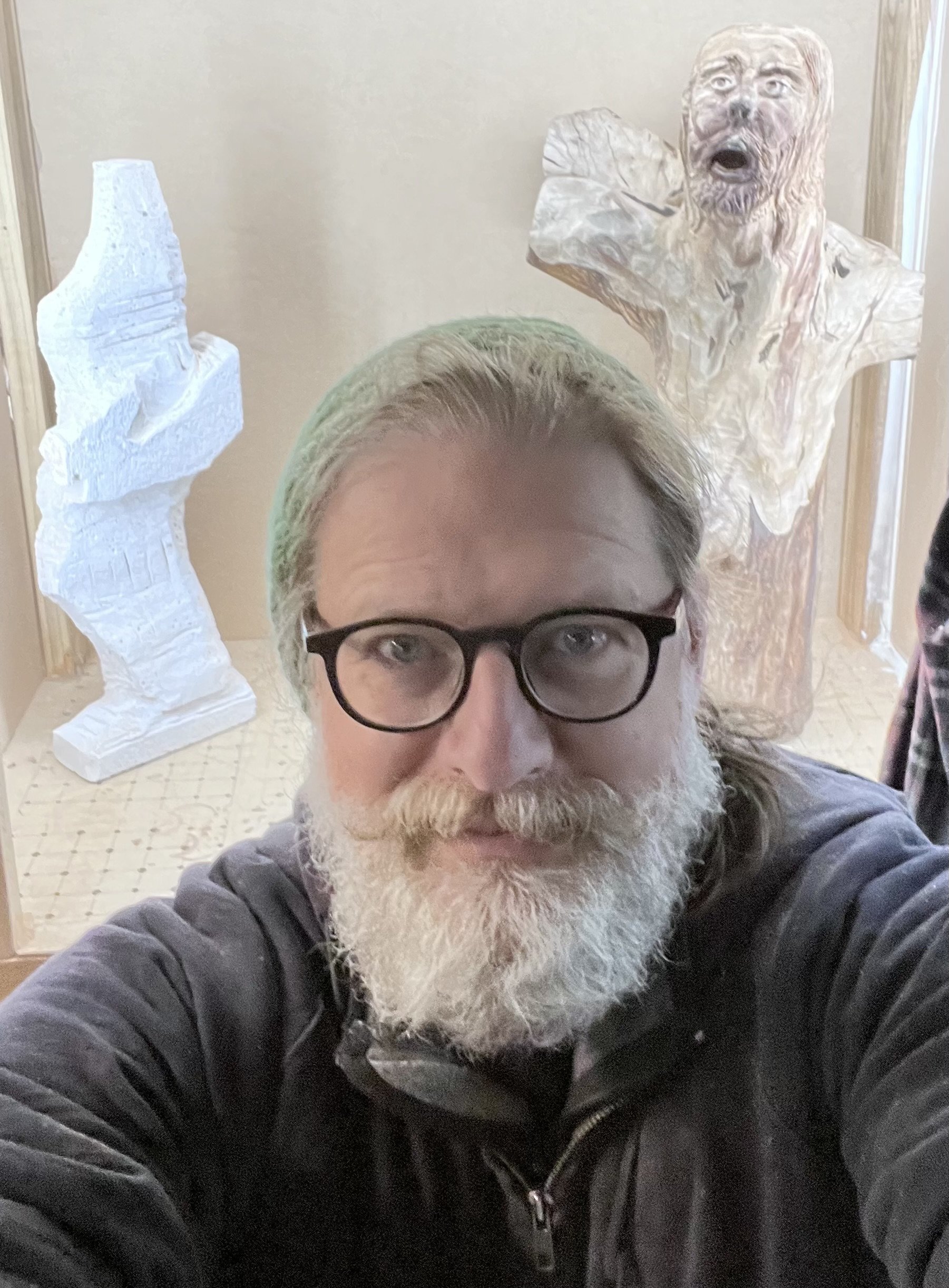
‘Daedalus’ Carved tree trunk
In Greek mythology, Daedalus s remembered as a master craftsman who wrestled with destructive and constructive power, and this ultimately became his greatest burden. The father of Ikarus, Daedalus reminds us that wisdom is often measured by our willingness to bear the consequences of what create.