Art as a path to insight
Learning beside the master
The Artist’s Woodshed Studio
There is a particular kind of knowing that does not come from thinking harder, but rather from learning how to See things more clearly.
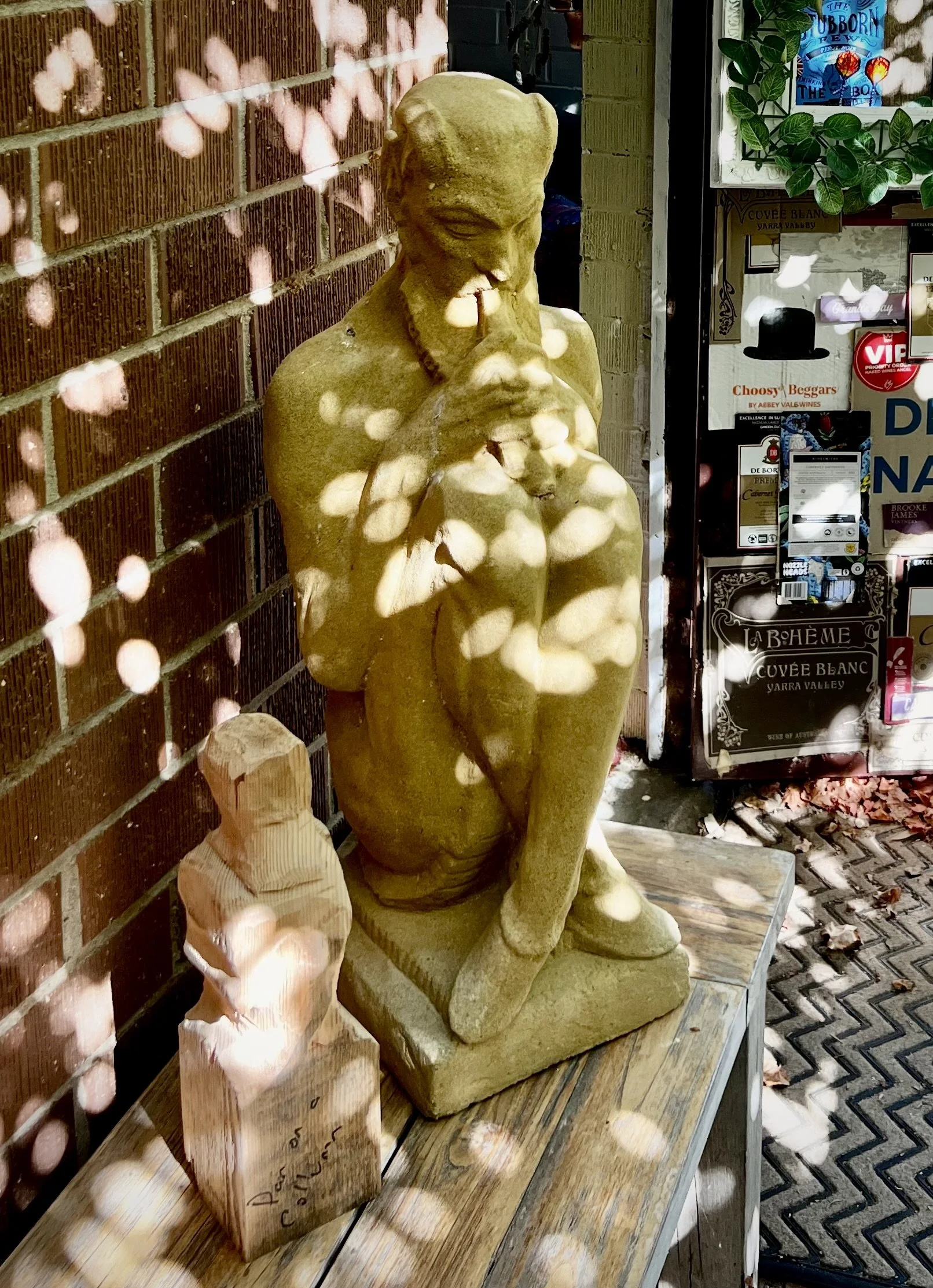
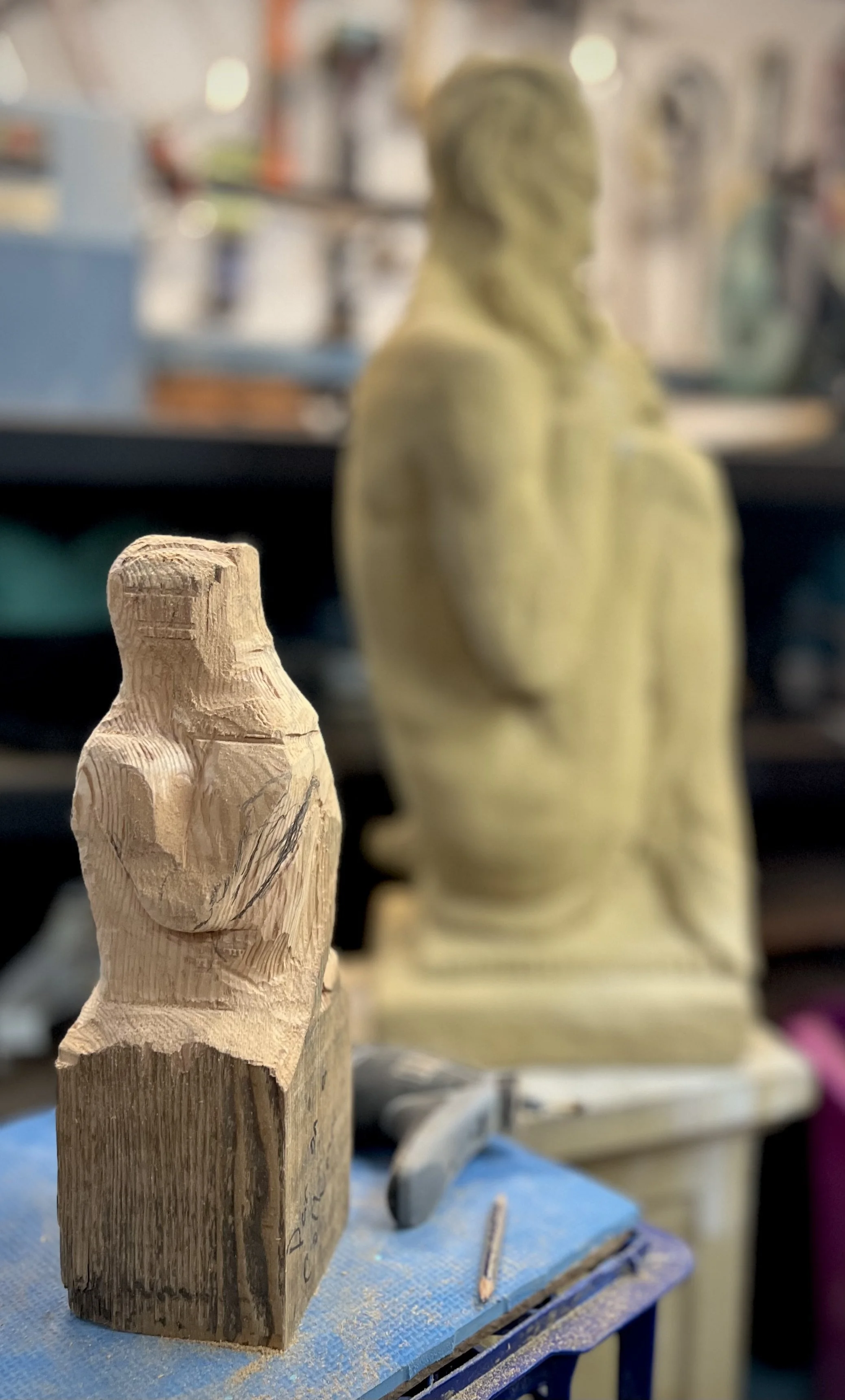
This weekend, I spent many long hours in the woodshed studio, carving. Slowly shaping a figure of a mythical Pan, playing his pipes for the many Australian Magpies that visit our home. The work was slow… and I found myself paying close attention to form, proportion, weight, balance… and coming up short. In trying to bring a block of cedar closer to the realty that inspired it, I realised just how unforgiving sculpture is of ‘inattention’.
If a finger is outstretched, the forearm must change.
If the head turns, the neck follows. And often the torso with it.
If the weight settles differently, everything ‘downstream’ must respond.
You can’t fake this.
and you can’t rush it.
A sculpture only begins to look right when you see what is actually there, rather than what you assume should be there.
And seeing, it turns out, is a skill.
Art as a path to insight
The Artist’s Woodshed Studio
Practice in conversation
The Artist’s Woodshed Studio
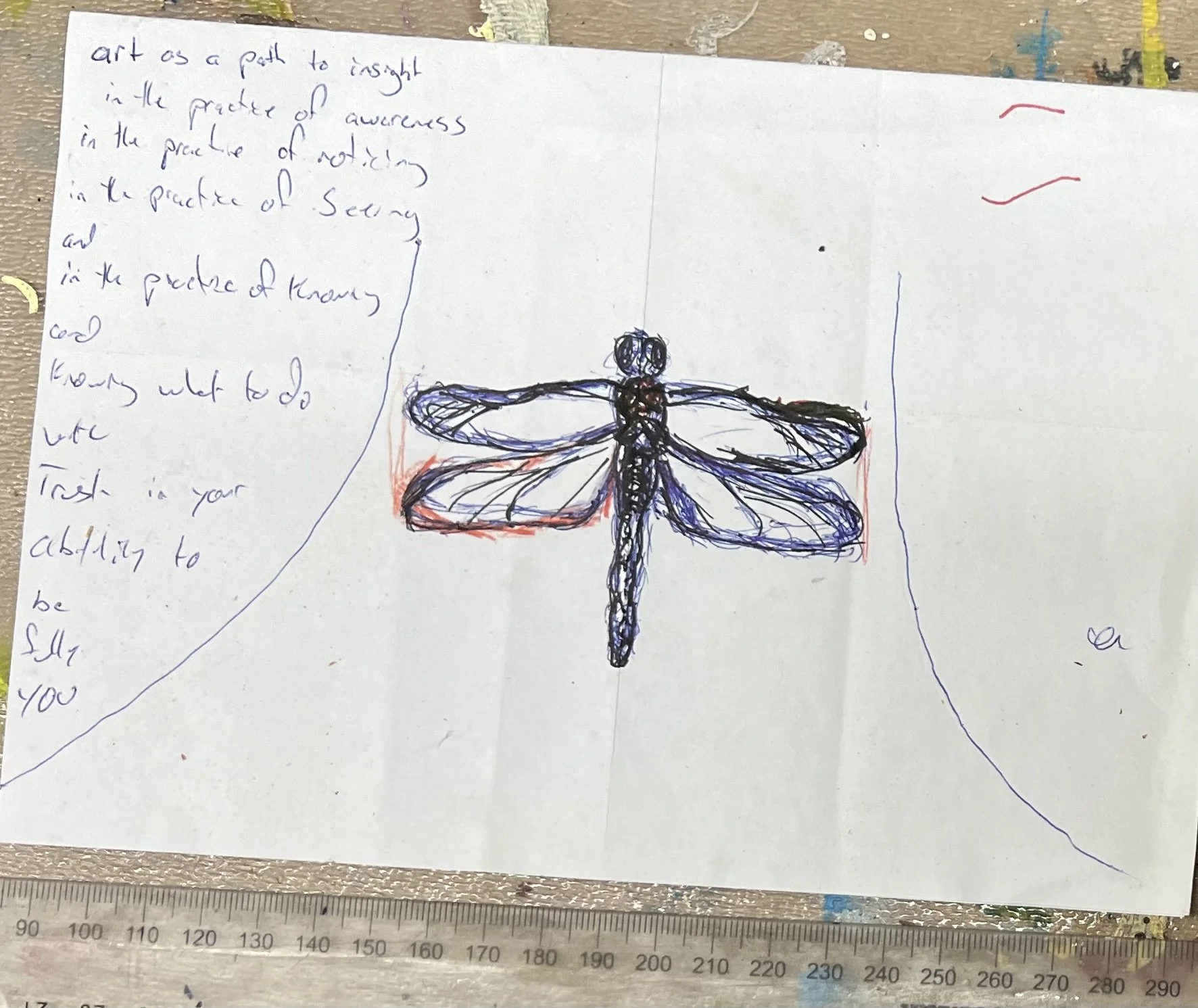
Art, at least as I practice it, is not primarily about self-expression.
It is about awareness.
The practice of noticing.
The practice of seeing.
The practice of knowing… and knowing what to do.
And perhaps, most importantly, learning to trust that if you can get out of your own way, you are already enough to respond truthfully to what you encounter.
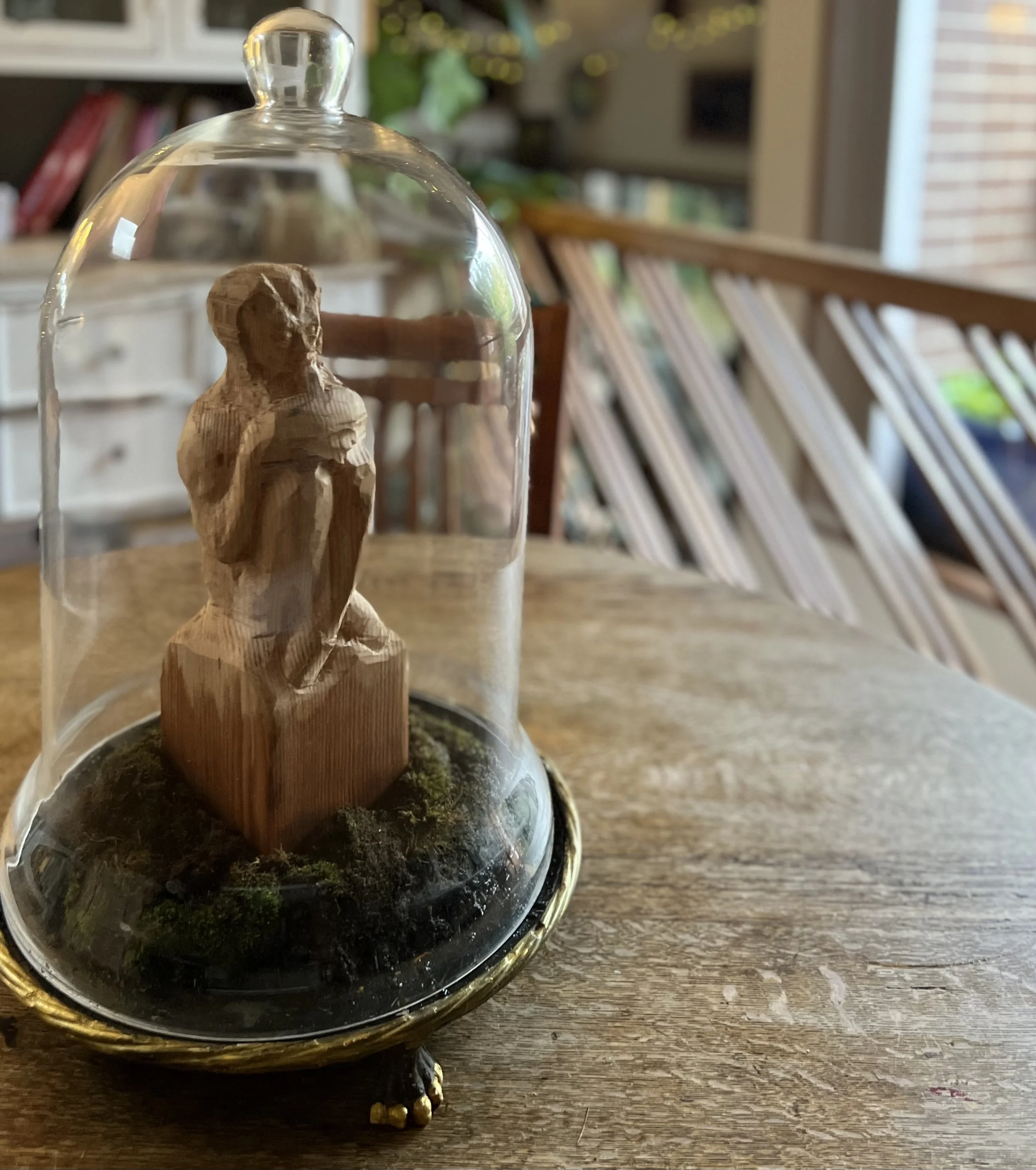
Working along side a finished piece is humbling.
The completed sculpture knows things my almost raw piece does not… yet.
Not because it is superior, but because it has already been seen clearly, again and again, by someone willing to stay with it.
That is what mastery looks like form the inside. Not Brilliance. Persistence in attention.
The more I notice, the better the work becomes. The more I trust my capacity to notice.
This is process. And I suspect all art works this way.
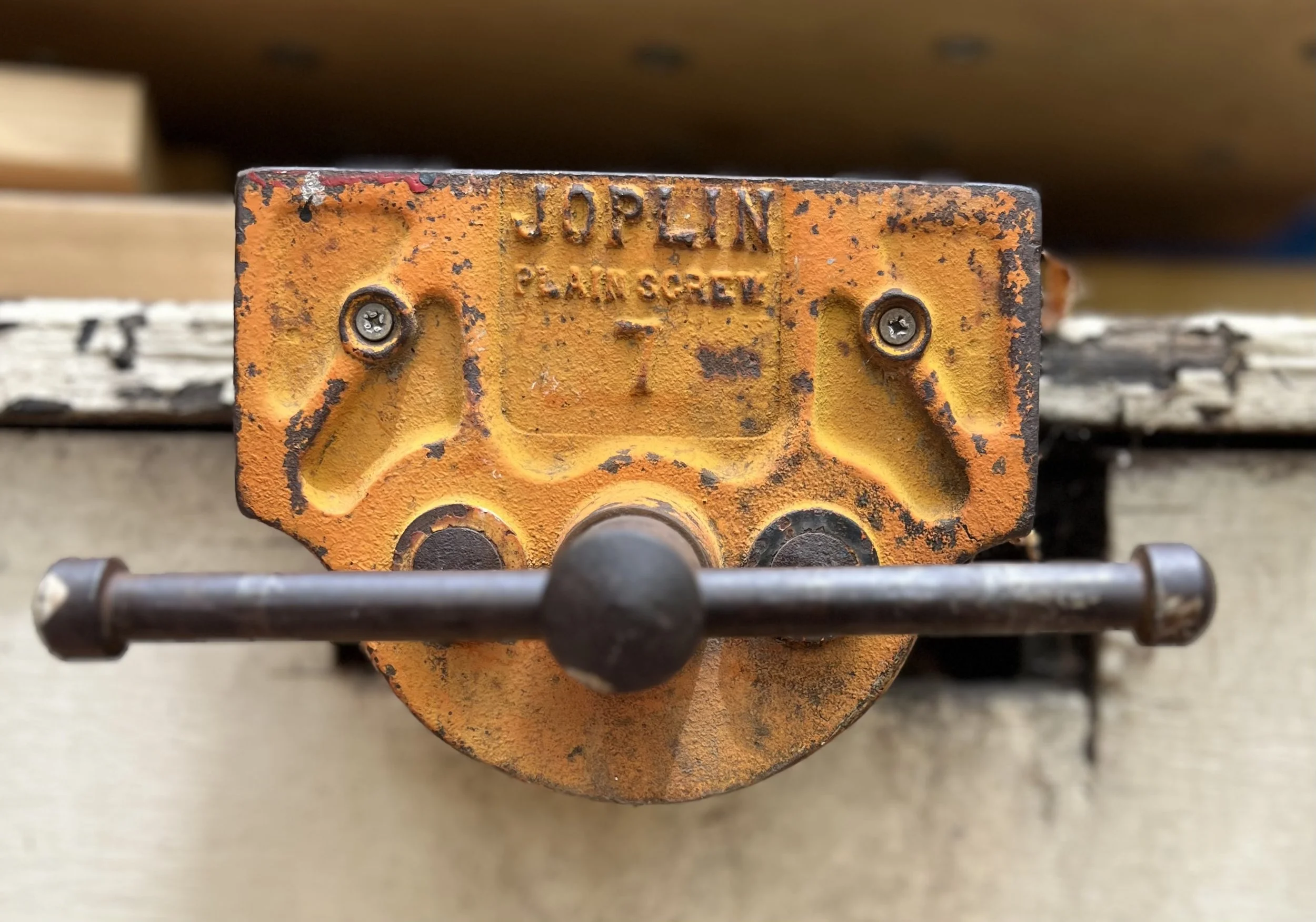
Seeing what was always there
The Artist’s Woodshed Studio
Something else happens when you train your eye.
You begin to see, regardless of your context, and regardless of where you are. You start seeing the coincidences, and the moments of beauty, and the things that matter start to appear… and you start to get that hard to explain feeling when someone is looking at you, and you notice, before you see them, you feel the weight of their gaze… and this is how subtle, I’ve found, that ability to see what matters to be. It is an almost imperceptible, but definitely present sensation… of the world offering information to you that you may have been walking past for years until you started to notice it in a new light.
Not imagination.
Perception, finally switched on.
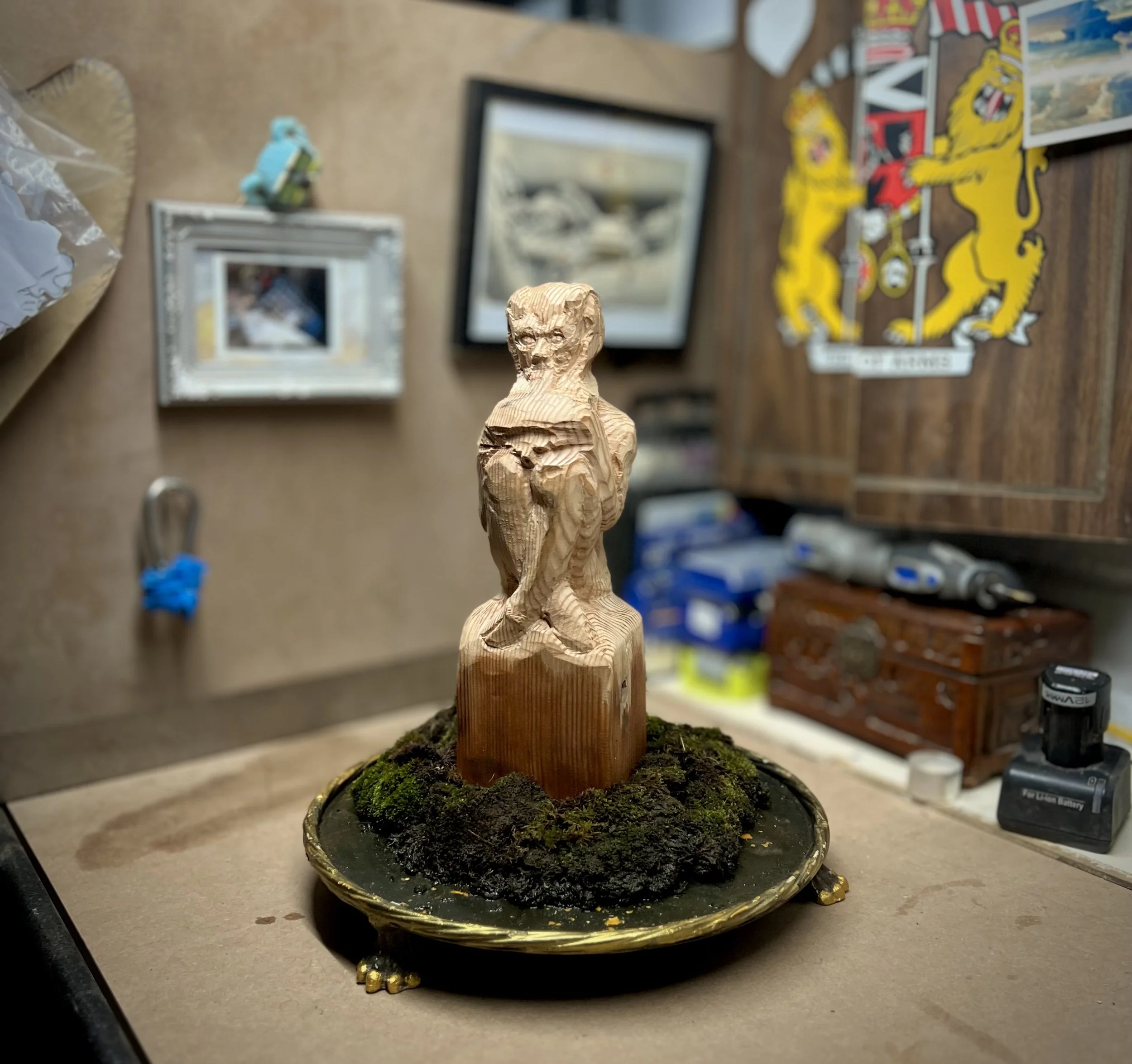
Form emerging
The Artist’s Woodshed Studio
“Mastery is not certainty. It is the willingness to keep returning and to keep looking. ”
What drew me to art as a practice is that it lets me train this life giving capacity to see what matters, in an experimental space, (my wood studio) where the consequences are low.
Here, a misjudged cut can be repaired. A missed detail can be returned to, tomorrow.
Often, life can feel less forgiving. In leadership, in relationships, in moments that matter, the cost of not seeing clearly can be high.
We misread people.
We impose stories.
We act too quickly, or too late.
Art offers a way to build the muscle of awareness before the stakes are existential.
Perhaps that is why it has become a foundational practice for me.
Those who can see what matters… easily, calmly, without distortion… tend to be the ones others trust. Not because they claim authority, but because their attention has been earned.
This kind of seeing is a ‘shibboleth of mastery’. That secret signal of understanding something that others do not. You can’t pretend your way into it. It shows up in what you notice, and in how you act upon that.
I believe this is true not just for artists, but for leaders, coaches, facilitators, bakers of bread, and anyone serious about how they show up in the world through their craft.
If you are drawn to this, to the work of noticing, of seeing more clearly, of trusting yourself to respond, then you are already on the path.
Sometimes the next step is simply to practice.
Sometimes it is to practice with someone.
If this resonates, and you’re curious about how to develop this capacity in your leadership or life, you’re welcome to reach out. This is the work i care most about.