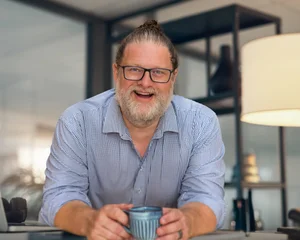
Growing into the responsibilities of leadership
Recognising integrity, receiving feedback, and FINDING the support to keep growing
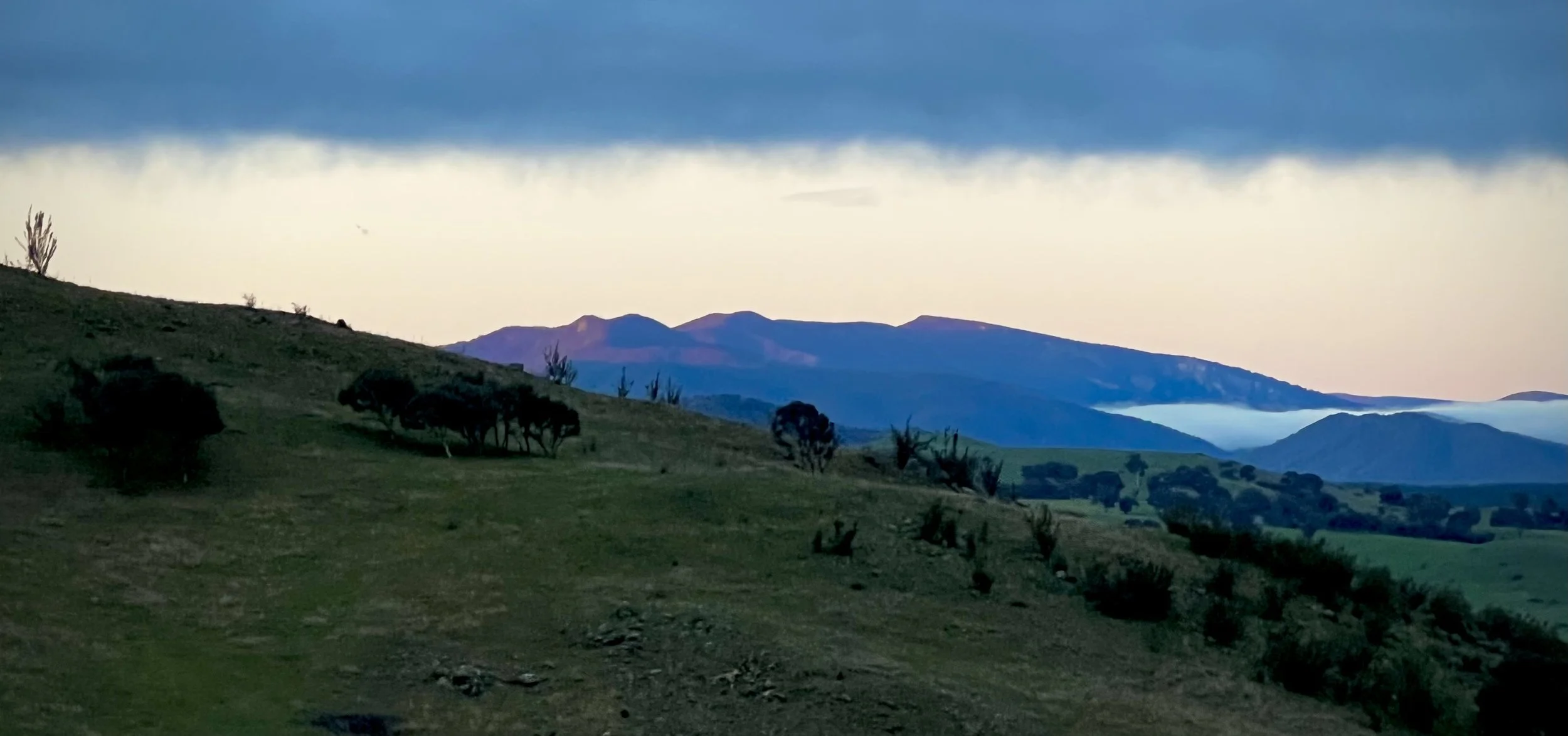
‘The responsibilities we carry’
Pierce Hill, Mt Mcdonald, Tidbinbilla Mountain, and others,
Ginninderry Conservation Corridor on the Murrumbidgee River
I care about who we choose to lead us. In the public service especially, those choices reach well beyond the person who gets the job. They influence the advice that is heard, the people who are encouraged, and what becomes possible for the communities we serve.
What troubles me is the possibility that we can admire integrity in principle and find it inconvenient in person. We say we want people who exercise judgement and speak honestly. How do we respond when their judgement differs from ours, or their honesty draws attention to something we would rather leave alone?
I was turning this over with a friend as we walked north of Canberra. He works in the public service; I have worked within it and still work with various levels of public service. Between talking about the trail, the history of the land, our children, and getting older, we kept coming back to the responsibilities people carry. Parenting was part of that conversation too: how to provide enough structure and encouragement for our children to find their own way, including when their choices challenge us.
We talked about speaking truth to power, and how difficult it can be to hear that we have got something wrong. I know that difficulty myself. It is much easier to value openness when the feedback concerns somebody else.
On the way home, another friend called. His leadership potential has recently been recognised within the Australian Public Service, and I was proud of him. He has long cared about governance and fairness, about developing others, and about making the system work better. He also takes a rigorous interest in his own development, including the skills he still needs to build.
He told me that he often thinks about our conversations when considering leadership decisions. That was a generous thing to hear. I was pleased that someone whose approach I respect was being given the opportunity to develop it further.
Those two conversations belong together for me. I want the world to recognise and encourage good leadership wherever we find it. I also want to keep examining whether I can welcome the qualities I admire when they ask something difficult of me.
What we recognise, we encourage
Leadership potential, in my mind, should be recognised in the way someone behaves: how they exercise judgement, respond to difficulty, develop others, and uphold the values their organisation professes.
Yet, I’ve noticed a troubling practice in many places in the world, the APS included, when advancement appears to depend on keeping those in power comfortable. This can be seen in the easy (and sometimes inane) question given by an often eager ‘ladder-climber’ in an all staff meeting to the Executive… or in the agreement offered before an issue has been thoroughly examined. It can easily be found in the reluctance to raise something important because it might unsettle those who benefit from the existing status quo.
Loyalty to a shared purpose can be a considerable strength. However, personal allegiance becomes a problem when it prevents us from questioning whether we are serving that purpose well.
There is research that helps explain why these patterns can persist. In a study of managers and chief executives at large US companies, James Westphal and Ithai Stern found that flattery, agreement with a CEO’s opinions, and personal favours were associated with a greater likelihood of obtaining board appointments through the CEO’s network. [1]
That study concerned corporate board appointments in the United States. It does not tell us how frequently this happens in the APS. For me, it does offer a reason to examine how access to opportunity can be shaped by the approval of those who already hold power.
If I am selecting or developing someone, I need to ask myself what evidence I have of their leadership. Can I describe how they demonstrate fairness, sound judgement, and care for others? Would I recognise those same qualities in someone who disagreed with me?
The responsibility becomes especially important when the organisation around us struggles to live up to its stated values. Within the decisions we can influence, we still have choices about what we encourage.
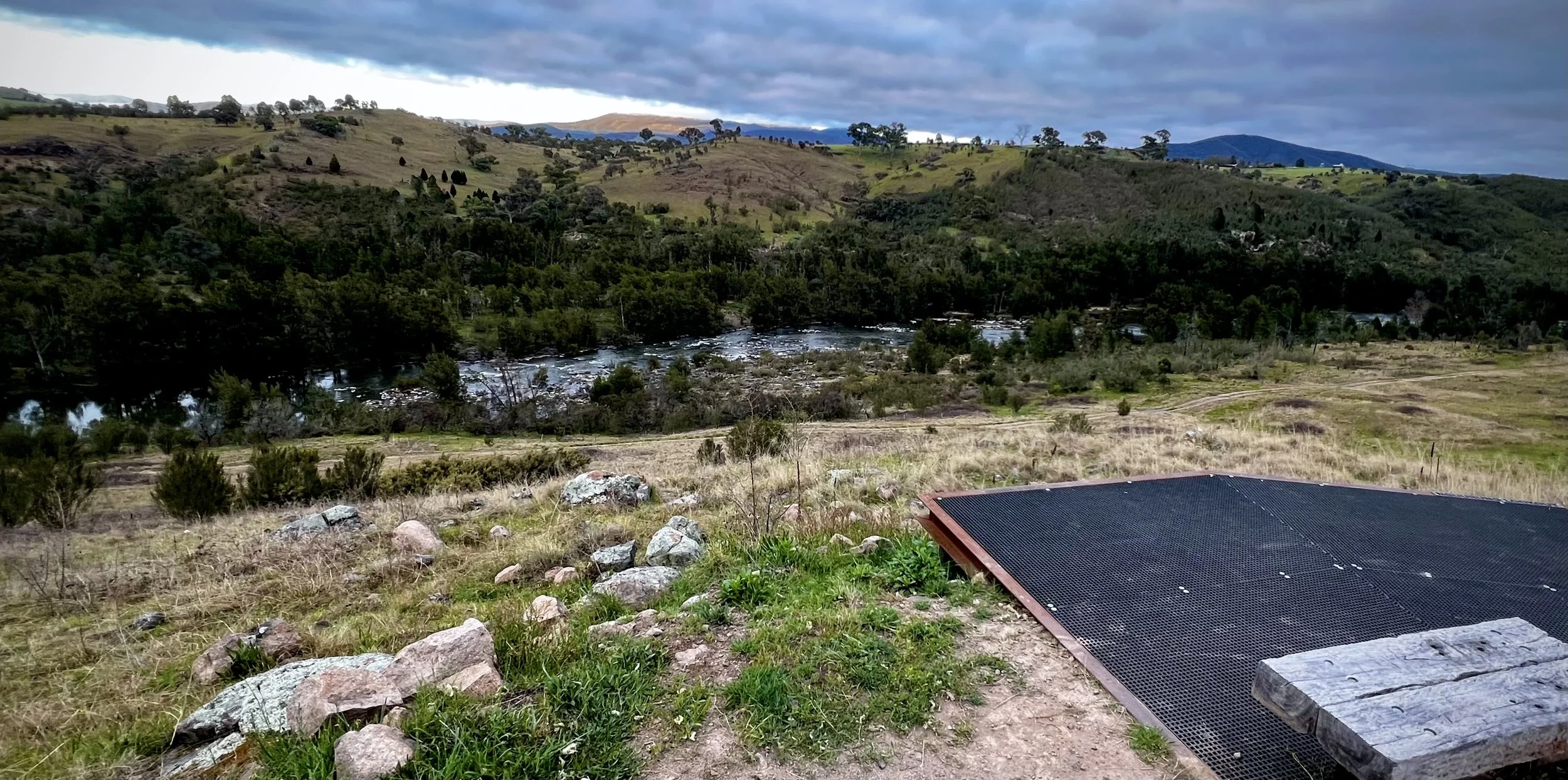
‘Recognising… with awareness’
Nguurung Lookout
Gininderry Conservation Corridor on the Murrumbidgee River
Can we hear what leadership asks of us?
On our walk, my friend and I talked about speaking truth to power. We also talked about what it takes to receive truth.
We all have experienced that sensation of realising that we have fallen short of what needed to happen, and how this can be difficult. We may have worked hard, intended well, and made a decision with incomplete information. But someone’s account of its effect can sit uncomfortably beside the story we tell ourselves about the kind of person we are.
Research by Nathanael Fast, Ethan Burris, and Caroline Bartel explored this difficulty. Their field study found that managers who felt less capable in their managerial role were less likely to seek employee input. Their experimental work supported a role for ego defensiveness in resistance to employees’ suggestions for improvement. [2]
I know that this happens to me… and have devoted considerable time to help me reduce this ego defensiveness. My practical concern is what happens in the moment someone offers a view we would rather not hear. Do we become curious? Do we interrupt? Do we begin assembling our defence before we have understood what they mean? And how can we open to be discerning to what is, and thus enable us to respond (as opposed to react).
I recognise those questions in myself. Throughout my development, I have worked on my skills and my awareness of how I respond, and, unfortunately, sometimes react, to different situations. I am still learning how to raise difficult truths in ways that people can engage with, and how to remain open when it is I who needs to hear the difficult truth.
While the person speaking has responsibilities for accuracy, judgement, and care, the person with authority has a particular responsibility for what happens next. Their response helps determine whether the next concern will ever be raised.
Every new role asks us to learn again
As we walked, my friend and I talked about how every new role, or promotion brings new responsibilities. As a leader we may understand the fundamentals of leadership, while still needing to learn the context, build relationships, and earn trust in a new setting.
An Aikido sensei friend of mine recently reminded me that it is better to learn the lessons of life ‘on the mat’, in the dojo, rather than when the consequences are unfolding in everyday life. I think about that in relation to leadership. Preparation matters. Reading, practice, questions, and mentorship can help us arrive better equipped.
We also learn while doing the work. We discover how we respond under pressure, what we have misunderstood, and where our familiar approach no longer serves us.
I try to make room for both approaches in my examination of life’s leadership experiences. What happened? What did I notice in myself? What might the other person have experienced? What would I do differently now?
A coach, mentor, or trusted colleague can help me stay with those questions long enough to learn something useful. They can also challenge an explanation I may have become rather comfortable with.
The willingness to keep learning seems to me central to growing into responsibility. Whatever our title, the work continues.

‘Every new role asks us to learn again’
Verbascum thapsus (‘Great Mullein’)
Setting down the armour
In my current work supporting leadership and development conversations, I keep returning to a question: how do we help people become more aware of themselves, and sufficiently willing to be vulnerable that meaningful growth becomes possible?
We each bring a history to our work. We have learned ways of protecting ourselves, gaining approval, handling disagreement, and responding to uncertainty. Those patterns deserve our attention, particularly when we have authority over other people.
I believe we have a responsibility to notice when our own history is shaping how we treat someone, and to seek the support we need to change harmful patterns. We can take that responsibility while still being ‘works in progress’.
There is an inheritance in leadership as well as in parenting. In both contexts, other people live with the effects of our habits, our decisions, and the ways we respond when things go wrong. If you are a conscious leader, or a conscious parent for that matter, you will work to become deliberate about what you pass on.
This requires honesty about the environments people work in. Some workplaces punish uncertainty or use an admission of difficulty against the person making it. Asking someone to be vulnerable in those circumstances requires care. They need choice about what they disclose, to whom, and for what purpose.
Sometimes the first useful step is finding someone outside that immediate environment with whom we can think openly and rigorously.
Managers remain responsible for developing their people and creating conditions in which they can contribute. Alongside that responsibility, each of us can consider the agency we have: the support we can seek, the questions we can ask, and the behaviour we can practise. Those opportunities will differ with our circumstances, but they are worth looking for.
A conversation that asks something of us
One of the things I really value about my friends, is that they can ‘call me out’. They can talk directly and challenge my assumptions. It is not easy, but because I unquestioningly trust that they are stewards of our friendship, I can listen with an open heart. Like this, a useful development conversation can be quite blunt. It can ask questions that are difficult to answer, particularly when they touch something we would prefer to explain away.
At its best, I find it has something in common with good exercise: effort, discomfort, and a sense that we have done work worth doing. The challenge needs to be proportionate, respectful, and directed towards something the person wants to develop.
In my coaching, I often begin by helping someone connect with their deeper values. What matters here? What kind of person do they want to be in this situation? We then pay attention to their emotional state and the assumptions accompanying it.
Certainty is often worth exploring. When something feels like “just the way it is”, what have we observed, and what have we concluded? What could curiosity help us discover?
These are questions I would invite a reader to take into their own reflection:
Which value do I want my next action to express?
What am I feeling, and how might it be influencing my interpretation?
What might I learn if I asked one more question before responding?
What is within my influence, and what support would help me act well?
Awareness gives us something to work with. Acknowledging what is present, including our own part in it, helps us choose a response. We can then practise acting in ways that reflect our values and examine the effect.
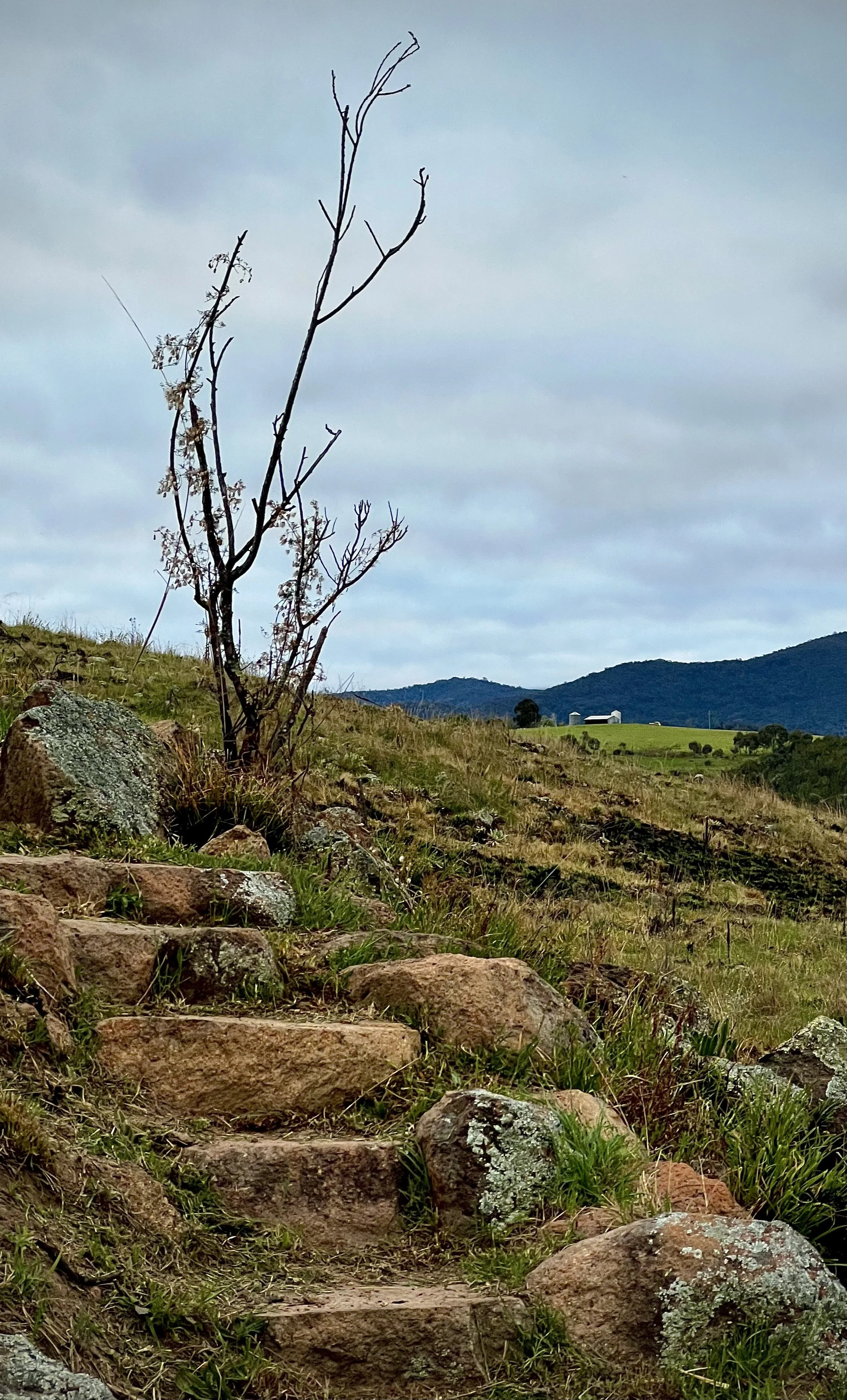
‘A conversation that asks something of us’
Gininderry Conservation Corridor on the Murrumbidgee River
The leadership we pass on
Thinking back on the morning walk, I remain grateful for the conversations I held with my friends. And for having friends with whom I can explore the difficult questions of public life, parenting, and integrity.
We can encourage this earnest exploration in one another. We can notice someone exercising good judgement, making room for a different view, or investing in another person’s growth. We can be specific about why it matters.
We can also ask the same of ourselves. As our responsibilities grow, what are we doing to strengthen our judgement, self-awareness, and ability to learn?
And who is in our corner, helping us look honestly at the answer?
A conversation about your own leadership
If you are growing into new responsibilities, working through a difficult leadership situation, or looking for someone who can support and challenge your development, I offer individual coaching through Insightful Path.
Together, we can explore what matters to you, examine the patterns shaping your response, and work towards practical actions that reflect your values.
You are welcome to get in touch through Insightful Path to discuss whether coaching could be useful for you.
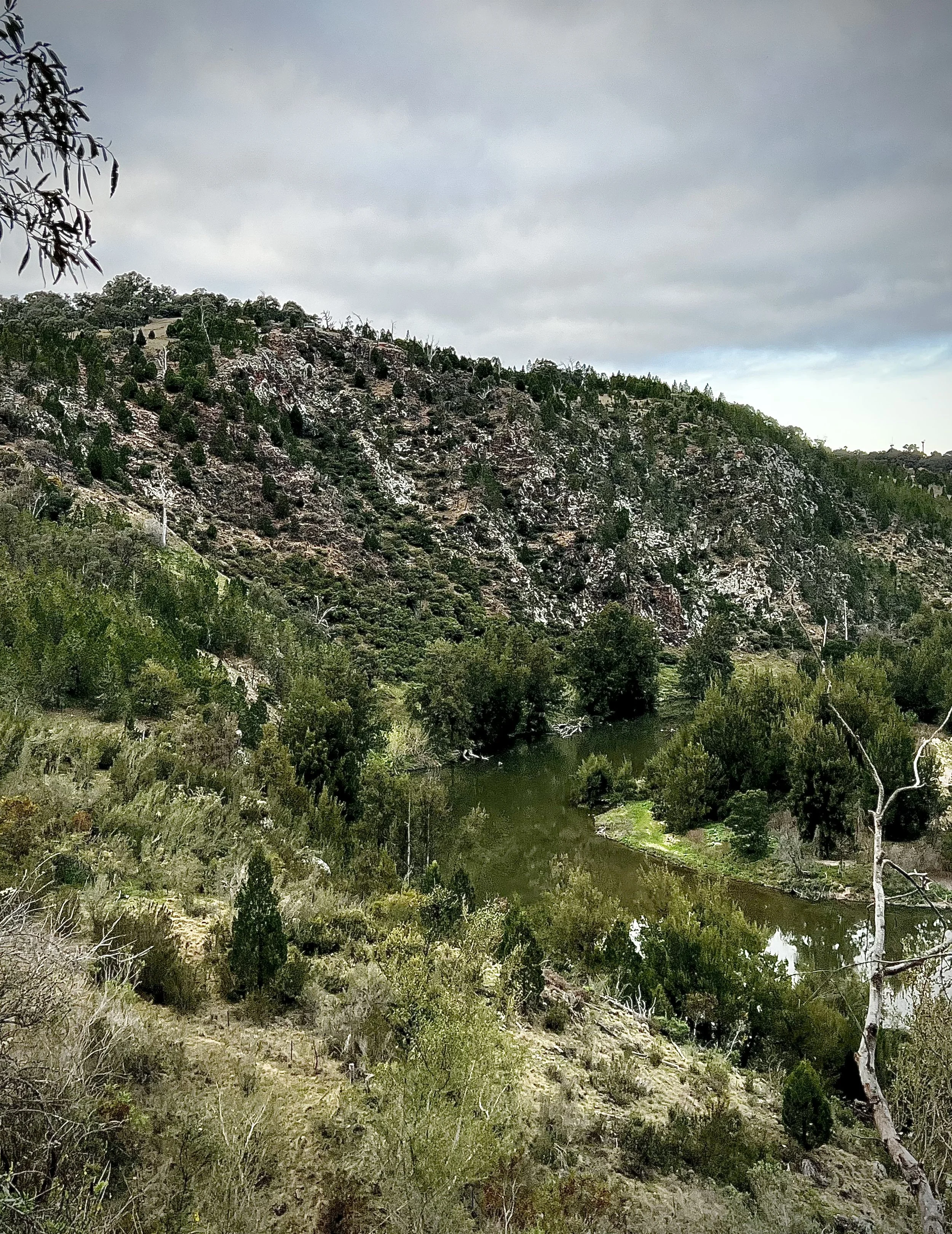
‘The change in perspective’
Looking toward Shepherds Lookout
Gininderry Conservation Corridor on the Murrumbidgee River
Research mentioned
Westphal, J. D., & Stern, I. (2006). The Other Pathway to the Boardroom: Interpersonal Influence Behavior as a Substitute for Elite Credentials and Majority Status in Obtaining Board Appointments. Administrative Science Quarterly, 51(2), 169–204.
Fast, N. J., Burris, E. R., & Bartel, C. A. (2014). Managing to Stay in the Dark: Managerial Self-Efficacy, Ego Defensiveness, and the Aversion to Employee Voice. Academy of Management Journal, 57(4), 1013–1034.