Learning to play the APS Recruitment Game
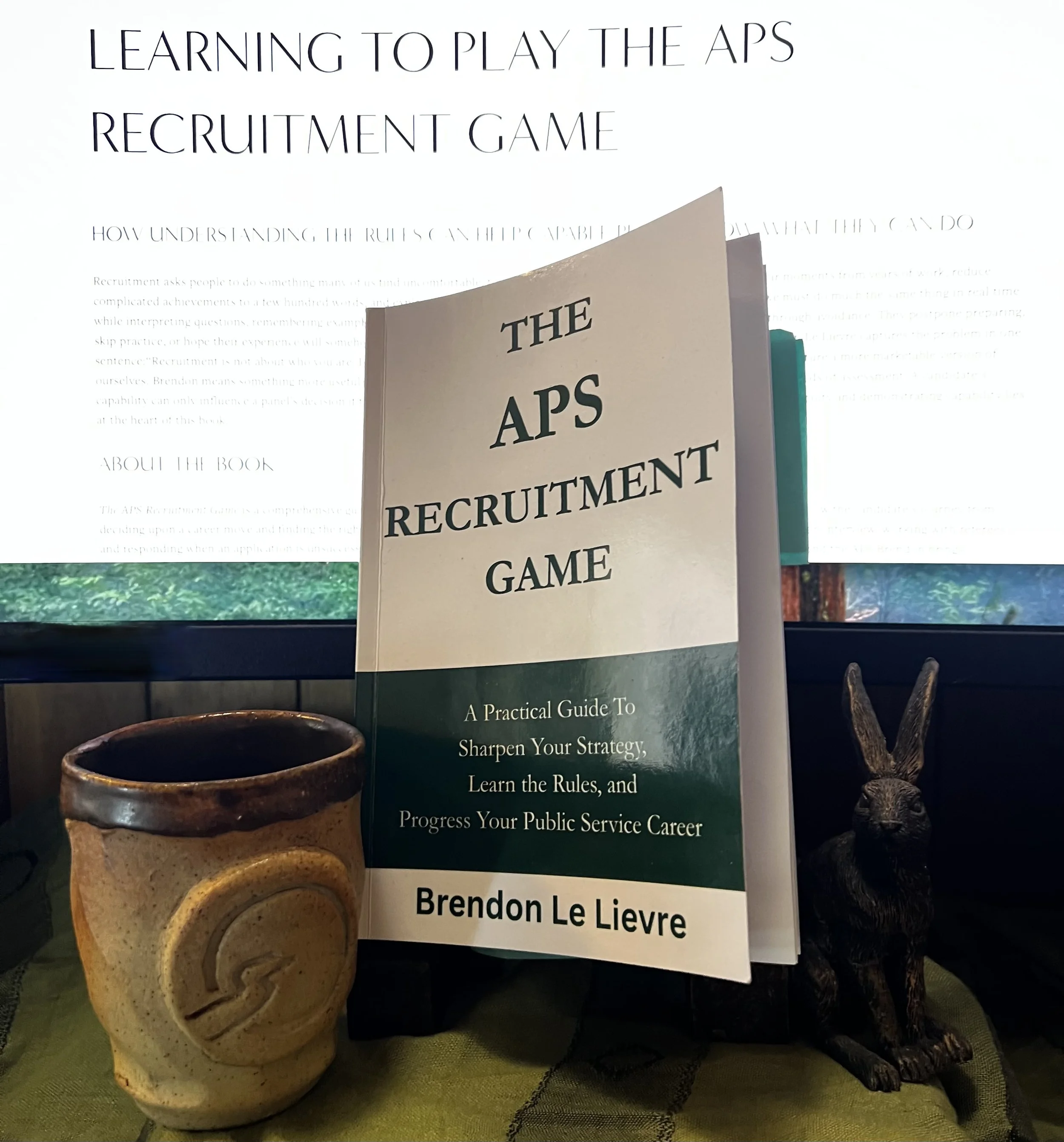
The APS Recruitment Game by Brendon Le Lievre
From the Insightful Path Library
How understanding the rules can help capable people show what they can do
Recruitment asks people to do something many of us find uncomfortable: turn ourselves into evidence. We must select particular moments from years of work, reduce complicated achievements to a few hundred words, and explain our value to people who may never have met us. At interview, we must do much the same thing in real time while interpreting questions, remembering examples, and trying to remain composed. Many people respond to this discomfort through avoidance. They postpone preparing, skip practice, or hope their experience will somehow speak for itself. Usually, it does not. Early in The APS Recruitment Game, Brendon Le Lievre captures the problem in one sentence:
“Recruitment is not about who you are. It is about how well you can show it.”
This could sound like an invitation to manufacture a more marketable version of ourselves. Brendon means something more useful. Recruitment is a particular kind of process, with its own rules, language, and methods of assessment. A candidate’s capability can only influence a panel’s decision if the panel can see and assess the evidence for it. The distinction between having capability and demonstrating capability lies at the heart of this book.
About the book
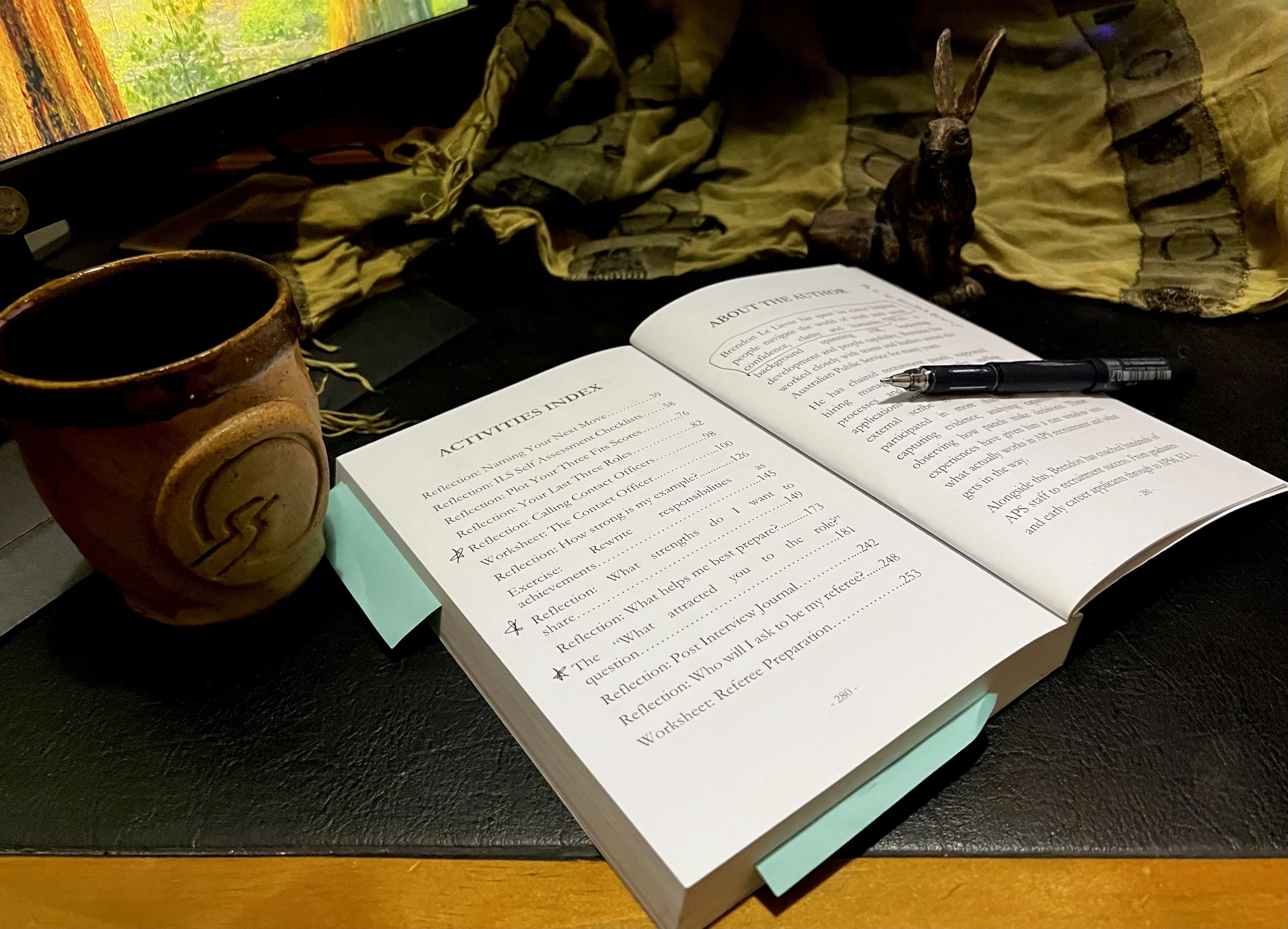
This book combines recruitment frameworks with reflections, exercises, and practical worksheets
The APS Recruitment Game is a comprehensive guide to navigating recruitment in the Australian Public Service. Its fourteen chapters follow the candidate’s journey from deciding upon a career move and finding the right role through contacting the agency, preparing an application and résumé, attending an interview, working with referees, and responding when an application is unsuccessful. The final chapters consider frequently asked questions and career movement beyond the APS. Brendon brings substantial experience to the subject. He has worked in human resources, leadership development, and people capability; chaired recruitment panels; supported hiring managers; worked as an external scribe; and coached APS candidates at levels ranging from graduates to the SES. According to his author profile, his scribing work alone has involved more than 300 interviews. The book converts that experience into practical frameworks, including the Five Career Moves, the Three Fits Framework, the Integrated Leadership System, STAR and STAR+, achievement statements, the Seesaw, and the Funnel. These are accompanied by reflection questions, self-assessments, worksheets, sentence starters, and worked examples. This makes it a book to use rather than simply read.
Learning the rules
Brendon’s opens his book with a metaphor that draws upon board games and sport. If we want to participate effectively, we need to understand the rules of the game, what successful performance looks like, and how to practise. APS recruitment has formal rules established through merit-based selection, capability frameworks, written applications, interviews, and referee reports. It also has conventions that may be less visible to candidates: how panels interpret evidence, how the Integrated Leadership System shapes expectations at different levels, how examples are compared, and how decisions are formed across the selection process. Brendon’s pragmatic response is to make this system more legible. This matters because people can easily interpret an unsuccessful application as a judgement on their underlying capability. Understanding the system permits a more precise assessment:
Did I choose the strongest example? Did I explain my personal contribution? Did I demonstrate performance at the required level? Did I answer the question the panel actually asked?
These questions return some agency to the candidate. They also support the growth mindset Brendon introduces near the beginning of the book. Recruitment becomes a capability that can be learned and improved through preparation, practice, feedback, and reflection. An unsuccessful application still matters. It may be deeply disappointing. It does not, however, have to become a final judgement about the person who applied.
Finding language for what we already do
The second chapter, “Using the right language,” particularly resonated with me. Frameworks such as the APS Integrated Leadership System can initially appear bureaucratic or abstract. Used well, however, they can help people recognise and name capabilities they are already demonstrating. Someone may routinely build productive relationships, exercise judgement, manage competing priorities, influence stakeholders, or help others perform well without consciously locating those behaviours within a capability framework. Learning the language can help them see their own work more clearly. That has value beyond securing a position. Once a capability becomes conscious, it becomes easier to develop. We can identify where we already demonstrate it, where our evidence remains thin, and what experiences might help us strengthen it. Brendon generally begins from the assumption that his reader has capability. His role is to help them recognise it, find credible evidence of it, and communicate it more effectively. Readers may discover that an experience they dismissed as ordinary is evidence of leadership, judgement, initiative, resilience, or influence. They may also discover genuine gaps. Perhaps they have yet to operate at the level of complexity demanded by a role, or their examples do not demonstrate the capability they thought they did. Brendon’s calm and encouraging tone allows readers to examine these possibilities without feeling defective. A gap becomes something to understand and work with. This approach closely reflects my own interest in helping people find what is good, bring it into awareness, and build from there.
Practical advice from beginning to end
The book’s value lies in the accumulation of practical guidance across the full recruitment process. Brendon’s treatment of the contact officer conversation is an excellent example. He presents it as a fact-finding opportunity: a way to understand why the position exists, what the work involves, what challenges the successful candidate may face, and how the agency understands success in the role. This helps a person prepare a more relevant application. It can also help them decide whether they should apply at all. His guidance on résumés is similarly useful.

Throughout the book, are quotes and highlighted points that help the reader understand the key points.
A résumé is not an exhaustive record of everything someone has done. It is a carefully selected account of the experience that matters for the position being sought. The book extends this practical attention to applicant-tracking systems, artificial intelligence, online and face-to-face interviews, sentence construction, and even font selection. Some details may appear small, but together they remove uncertainty from a process that many candidates already find overwhelming. This specificity makes the book accessible. Readers are left with an understanding of how to act upon each principle within the book.
Preparing without becoming trapped by preparation
An insight of Brendan’s which I really resonated with concerns candidates who freeze during interviews. People sometimes prepare by memorising complete answers. When the question differs from the one anticipated, or a particular phrase disappears under pressure, the script collapses. The candidate may know the experience perfectly well but lose access to the exact sequence of words they prepared. Brendon recommends using frameworks and talking points. Know the experience. Understand its relevance. Remember your contribution, actions, decisions, and results. Then practise telling the story in different ways.
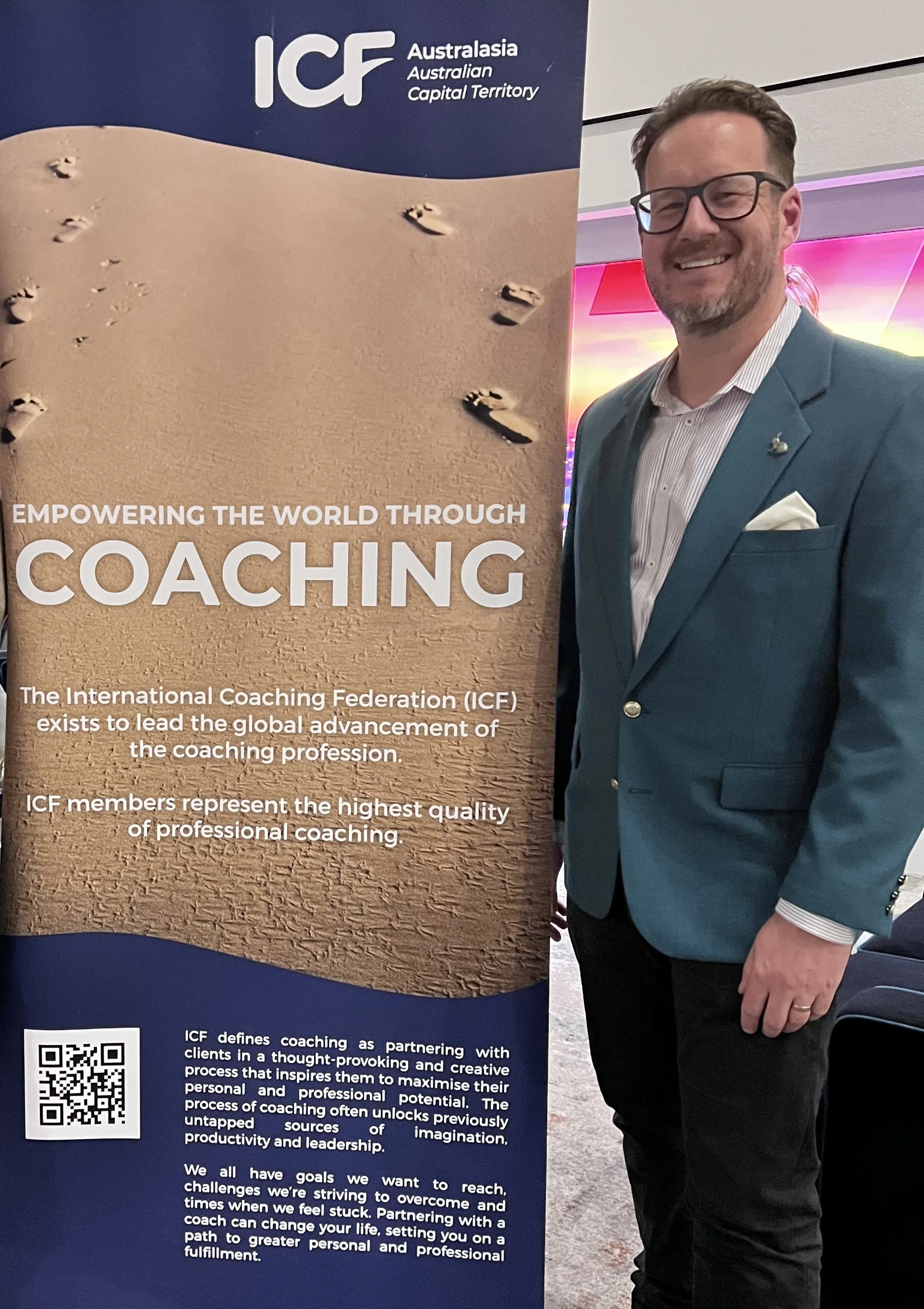
ICF Coach Connect Canberra
8 July 2025
I know Brendon as an experienced improvisational performer as well as an amazing coach, coach mentor, and facilitator.
These elements of his identity offer an interesting perspective on his advice. Good improvisation is not the absence of preparation. It is something that can (and should) be practiced, and is part of the ‘awase’ or blending with the moment. Our ability to respond in the moment depends upon attention, familiarity, responsiveness, and our familiarity with working with what is actually happening.
An interview requires a similar balance: enough structure to remain coherent and enough freedom to listen and respond. The aim of preparation is therefore not to reproduce a perfect script. It is to become sufficiently familiar with our own experience that we can speak about it naturally, accurately, and responsively.
What learning the game cannot do
There is a tension within any guide to recruitment. Learning how a system operates helps candidates participate more effectively. It cannot make every recruitment decision fair, remove all subjectivity, or guarantee that the strongest candidate will succeed. Organisational priorities, the available field, panel judgements, and circumstances outside a candidate’s control will continue to influence outcomes. Nor should learning the language of a system lead us to mistake that language for the whole person. The ILS may help someone describe their leadership behaviours, but it cannot contain the full complexity of their character, experience, or potential. There is also a risk that an anxious reader could turn a detailed guide into another set of things to get exactly right. That would run against the spirit of Brendon’s advice. The frameworks are most useful when they reduce cognitive load and support clearer thinking. They should not become additional scripts through which candidates attempt to engineer a flawless performance. The book is strongest when read as a way of developing informed agency: understand the process, prepare seriously, communicate honestly, and learn from what happens.
Personal reflection

Brendon Le Lievre and James Samana developing practical ways for people to apply the book’s ideas.
What stays with me most about Brendon’s work is the view of human capability beneath the recruitment advice. Many people possess more capability than they can readily see or explain. The work is often to help them recognise what is already present and remove some of the friction preventing it from being used. That friction may come from anxiety, unfamiliar language, misunderstanding the system, weak preparation, rigid scripts, or the belief that other people are simply naturally good at recruitment. Brendon does not minimise the demands of the process, and he does not treat readers as deficient because they find it difficult. His tone is calm, practical, and accepting. He helps people look honestly at their performance without turning every difficulty into a judgement about who they are. This is an important form of development.
In learning to explain our experience, we may come to understand it better ourselves.
Why I recommend this book
I recommend The APS Recruitment Game to people seeking to enter the APS, current public servants considering their next move, and managers, mentors, coaches, and colleagues supporting others through recruitment. Its principal strength is the combination of system knowledge and human understanding. It explains how APS recruitment works while respecting the person trying to navigate it. The book will not substitute for relevant capability, good judgement, or the experience required for a role. It can help people identify what they already offer, understand where they need to grow, and present their evidence more clearly. That is a considerable contribution. Readers can learn more about The APS Recruitment Game, access Brendon’s free resources, and find the paperback and Kindle editions through the Hare Consulting book page.
Reflection questions
Which parts of recruitment do you understand well, and which still feel mysterious?
What capabilities might you already demonstrate but struggle to name?
Are you selecting evidence that matters for the position, or trying to recount everything you have done?
When you prepare for an interview, are you becoming familiar with your experiences or memorising a script?
What could you learn from an unsuccessful recruitment process without turning it into a judgement about your worth?
Beyond the book: creating space for what matters
Brendon’s approach in The APS Recruitment Game reflects a broader philosophy that I had encountered in our earlier conversations.

In this Insightful Path interview, Brendon and I discuss how busy leaders can become more intentional about their time, question established patterns, and create space for work that matters. His practical suggestions include shortening meetings, protecting an equivalent amount of time for focused work, and asking what we would retain—or remove—if the working week suddenly changed.
Although the conversation concerns busyness rather than recruitment, the underlying approach is closely related. Understand the system you are working within, recognise the agency you already possess, and make deliberate changes that allow your capability to be used more effectively.